Last updated: October 24, 2026
Chemical peels work well for men. They can clear clogged pores, calm oily, acne-prone skin, fade sun spots and razor bump marks, and smooth rough texture, usually with little time off work. Men’s skin is thicker and oilier on average, so a peel plan for a man may need a few more sessions or a slightly stronger peel.
This guide covers what peels can do for men, which peel suits which concern, and how shaving fits into recovery.
Why more men are getting chemical peels
A 2017 review in Dermatologic Surgery describes chemical peels as an increasingly popular cosmetic procedure for men, and a cost-effective, reliable treatment. It lists the conditions peels have treated successfully in men, including acne, acne scars, rosacea, melasma, sun damage and rough, precancerous spots called actinic keratoses.
Most men want the same practical things: clearer skin, fewer visible spots and a fresher look, without a long recovery.
How men’s skin is different
A review of 57 studies found that men’s skin generally has more oil (sebum), more pigment and greater thickness than women’s skin. Men also have more hair follicles on the face.
That matters for peels in three ways:
- More oil and follicles. The 2017 review notes that men may need more treatments or a higher strength peel to get the same result.
- Daily shaving. Shaving can irritate the beard area, so tell us your routine before a peel.
- Sun exposure. Peels treat sun spots and sun damage well, and daily sunscreen afterward protects the results.
Chemical peels for common men’s skin concerns
| Concern | How a peel helps | Often paired with |
|---|---|---|
| Acne and oily skin | Loosens clogged pores and reduces surface oil | Daily acne treatment, AviClear |
| Acne scars and dark marks | Fades flat marks and softens shallow scars over a series | Microneedling or laser for deeper scars |
| Sun spots and sun damage | Evens tone and brightens skin | Daily sunscreen, laser for stubborn spots |
| Dark marks from razor bumps | Speeds fading of the marks left after bumps heal | Shaving changes, treatment for the bumps |
| Rough texture and dull skin | Smooths and brightens the surface | A simple daily routine |
| Fine lines | Softens fine lines around the eyes and mouth | Botox for forehead and frown lines |
For more detail, see our guides to peels for acne, acne scars and dark marks and hyperpigmentation.
What is the best chemical peel for men?
The best peel depends on your main concern and skin type:
- Salicylic acid: often the first choice for oily, acne-prone skin, because it works inside the pore.
- Glycolic acid: good for sun spots, uneven tone and rough texture.
- TCA (moderate strength): for stubborn spots and more visible sun damage, with a few more days of peeling.
- VI Peel: a blended medical-grade peel for acne, marks and texture together.
At Trillium, board-certified dermatologist Dr. Stefan Weiss performs the peels himself. We offer mild to moderate peels only, which suit most skin types and need little downtime. Deep peels aren’t offered. For deep wrinkles or deep scars, laser resurfacing is the usual alternative.
What to expect, including shaving
During the peel: You’ll feel tingling or warmth for a few minutes. The peel solution usually stays on for 2 to 15 minutes, and many men go back to work the same day.
After the peel: Your skin may look pink for a few hours and feel tight for a few days. Light flaking usually starts on day 2 or 3. With VI Peel, peeling runs from about day 3 to day 7.
Shaving: Don’t shave the morning of your peel. Afterward, skip shaving the treated area until peeling stops, because a razor can pull at flaking skin and leave dark marks. When you start again, use a sharp razor, shaving gel and gentle strokes. Ask us if you’re unsure when it’s safe for your peel.
Aftercare:
- Wear SPF 30 or higher every day.
- Don’t pick or peel flaking skin.
- Skip saunas, hot tubs, heavy workouts that make you sweat a lot, and very hot water until peeling stops.
- Go back to your usual products after about day 7.
Full directions are on our treatment instructions page.
How many peels will you need?
Most men need a series. At Trillium, 4 to 8 peels spaced 10 to 14 days apart is typical. Because men’s skin tends to be oilier and thicker, you may land toward the higher end. You’ll often notice brighter, smoother skin after the first peel, with fuller results over the series.
Before and after results
You can see real results from chemical peels for acne in our before and after gallery. Results vary from person to person.
Who shouldn’t get a peel
A peel isn’t recommended if you have very sensitive skin, an active cold sore, eczema, dermatitis, psoriasis, lupus, diabetes, an autoimmune disorder or a skin spot that hasn’t been checked. Tell us about any acne medicine you’ve taken, especially isotretinoin.
If you have darker skin, a peel can still be safe when it’s chosen carefully. See our guide to chemical peels for skin of color. For other skin concerns men commonly have, read why every man should see a dermatologist.
Chemical peels for men in Chapel Hill, Smithfield and Burlington
Dr. Weiss will look at your skin, ask about your shaving routine and recommend the peel that fits. Book a consultation to get started.
Frequently asked questions
Yes. Peels help men with acne, oily skin, sun spots, razor bump marks and rough texture, usually with little downtime. Men's skin tends to be thicker and oilier, so the plan may need a few more sessions.
Salicylic acid is often best for oily, acne-prone skin. Glycolic acid suits sun spots and uneven tone. A moderate TCA peel or VI Peel can help more visible sun damage or a mix of acne, marks and texture.
Skip shaving the treated area until peeling stops, because a razor can pull at flaking skin. Don't shave the morning of the peel either. Your provider will tell you when it's safe for your peel.
Most men need a series. At Trillium, 4 to 8 peels spaced 10 to 14 days apart is typical, and men's oilier skin can mean a few more sessions.
Peels can help fade the dark marks razor bumps leave behind. The bumps themselves are best managed with shaving changes and, if needed, prescription treatment from a dermatologist.
Yes. Our before and after gallery includes results from chemical peels for acne. Results vary from person to person.
About Dr. Weiss
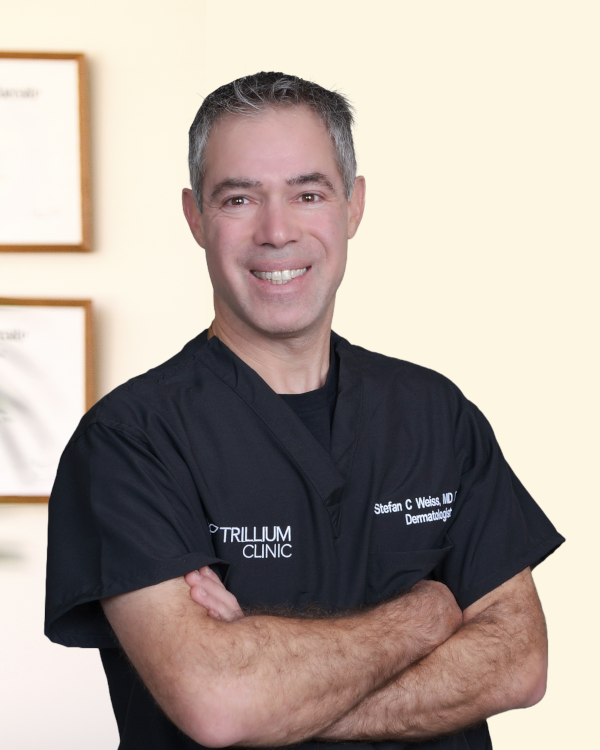
Stefan C. Weiss, MD, FAAD, is a board-certified dermatologist, the medical director of Trillium Clinic and an adjunct professor of dermatology at Brown University. He trained at Duke University School of Medicine and Stanford University Medical Center, has authored more than 100 peer-reviewed abstracts, posters and manuscripts, and has over two decades of experience in medical and cosmetic dermatology.
References
- Reserva J, Champlain A, Soon SL, Tung R. Chemical peels: indications and special considerations for the male patient. Dermatol Surg. 2017;43 Suppl 2:S163-S173.
- Rahrovan S, Fanian F, Mehryan P, Humbert P, Firooz A. Male versus female skin: what dermatologists and cosmeticians should know. Int J Womens Dermatol. 2018;4(3):122-130.
- American Academy of Dermatology. Chemical peels: Overview.
- American Academy of Dermatology. Chemical peels: FAQs.
This article is for general education and isn’t a substitute for personal medical advice. A board-certified dermatologist can tell you whether a chemical peel is right for you.