Changing Mole Warning Signs And When To Get A Skin Check
A changing mole can be an early sign of melanoma, the most serious type of skin cancer, particularly when it changes in size, shape, color, or feel. Most adults have between 10 and 40 moles, and the vast majority are harmless.
The good news: melanoma found early is highly treatable. Knowing what’s normal and what isn’t helps you decide when a mole needs a professional look.
What Does a Normal Mole Look Like?
A typical benign mole is:
- One color, usually an even tan, brown, or skin tone
- Round or oval, with a smooth, well-defined border
- Small, generally smaller than a pencil eraser
- Stable, looking about the same from month to month
Moles can be flat or raised. Although some benign changes may occur during pregnancy, a new or changing mole should still be evaluated rather than automatically attributed to pregnancy or sun exposure
Signs a Mole Should Be Checked
Dermatologists use the ABCDE guide to identify common melanoma warning signs, as explained in the American Academy of Dermatology’s guide to the ABCDEs of melanoma:
- A: Asymmetry. One half doesn’t match the other.
- B: Border. The edges are ragged, notched, or blurred.
- C: Color. Several shades of brown or black, or patches of red, white, or blue.
- D: Diameter. – Larger than about 6 millimeters (the size of a pencil eraser), though melanomas can be smaller.
- E: Evolving. Any change in size, shape, color, or elevation. A mole getting bigger or changing shape or color deserves attention.
Watch for the “ugly duckling”. A mole that looks different from all your other moles deserves a closer look, even if it doesn’t match any ABCDE sign.
Also get checked for a mole that bleeds, itches, hurts, crusts, or won’t heal, as well as any new, firm bump that grows quickly over a few weeks.
Why Early Evaluation Matters
Melanoma is most treatable when it’s thin and caught early, often with a simple outpatient removal. As it grows deeper, treatment becomes more involved. Early evaluation also catches other skin cancers, such as basal cell and squamous cell carcinoma, before they grow larger. Most changing moles that get checked turn out to be benign. A timely evaluation can help determine whether a mole needs further testing or treatment.
What Happens During a Dermatologist Mole Check?
- History: Your dermatologist asks how long you’ve had the mole, what changed, and about your personal and family history.
- Visual exam: The mole is examined and compared with your other moles.
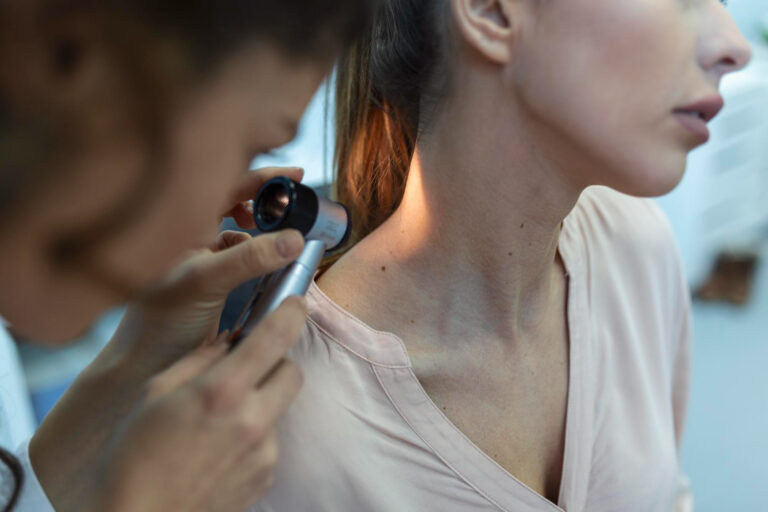
- Dermoscopy: A lighted magnifying tool shows color and structure patterns beneath the skin’s surface.
- Biopsy, if needed: After the area is numbed, all or part of the mole is removed and sent to a lab. Results usually take about a week or two.
Many patients use a mole check as a reason to have a full-body skin exam. Learn more about what a total body skin exam involves.
Who Should Schedule Regular Skin Checks?
- People with a personal or family history of melanoma or other skin cancer.
- Anyone with more than 50 moles, or with large or unusual (atypical) moles.
- People with fair skin, light eyes, red or blond hair, or skin that burns easily.
- Anyone with a history of blistering sunburns or frequent outdoor sun exposure.
- Past or current tanning bed users.
Mole Checks at Our Three Offices
Dr. Stefan Weiss and the Trillium Clinic Dermatology team evaluate changing moles at all three of our offices, so you can be seen close to home:
- Chapel Hill, for patients from Durham, Cary, Hillsborough, Carrboro, and Raleigh.
- Burlington, for patients from Mebane, Graham, and Alamance County.
- Smithfield, for patients from Clayton, Goldsboro, Garner, and Johnston County.
If a mole is worrying you, don’t wait for your next annual exam. Changing moles are a good reason to book a visit now.
Frequently Asked Questions
See a dermatologist if a mole is changing, looks different from your other moles, or has ABCDE features such as uneven color or irregular borders. Moles that bleed, itch, or don't heal should also be checked.
Yes. The Excel V+ uses two wavelengths: 532 nm and 1064 nm. The 532 nm wavelength addresses superficial vascular and pigmented concerns, while the 1064 nm wavelength reaches deeper vascular structures. When a lesion has both red and brown components, the physician may use both wavelengths sequentially during the same session.
Most patients feel only a brief pinch from the numbing injection. The biopsy itself is generally painless once the area is numb, although you may feel pressure or pulling. Mild tenderness afterward is possible. Follow your dermatologist's wound-care instructions, which may include applying petroleum jelly and covering the site with a bandage.
Many adults may be advised to have a yearly skin exam, depending on their risk factors. People with a history of melanoma, numerous moles, or atypical moles may need more frequent follow-up. Your dermatologist will recommend a schedule based on your medical history and individual risk.