Vascular Laser Treatment at Trillium Clinic with Excel V+
Vascular laser treatment can form part of a facial redness treatment plan when visible or dilated blood vessels contribute to persistent discoloration.
If you’ve been living with persistent facial redness, visible capillaries, rosacea flares, or stubborn brown spots, you’ve likely tried your share of concealers, color-correcting primers, and drugstore creams – all of which address the appearance of the problem without touching the source. The source of many red or pink changes is vascular: superficial blood vessels that have dilated or proliferated beneath the skin surface, sitting close enough to show through and change the color of what you see in the mirror. Brown spots, by contrast, have a pigment-related origin.
At Trillium Clinic Dermatology, Dr. Stefan Weiss offers the Cutera Excel V+, a dual-wavelength laser platform used to address a range of vascular and selected pigmented concerns. For patients considering vascular laser treatment in Chapel Hill, NC, or Excel V+ laser treatment, the following sections explain how this technology works and which concerns it may help address. For patients considering vascular laser treatment in Chapel Hill, NC, or Excel V+ laser treatment, the following sections explain how this technology works and which vascular and pigmented concerns it may help address.
What Is Vascular Laser Treatment?
Vascular laser therapy works on a principle called selective photothermolysis – the use of specific wavelengths of light that are preferentially absorbed by target chromophores in the skin. In the case of vascular lesions, the target chromophore is oxyhemoglobin, the pigment that gives blood its red color. When the laser energy is absorbed by the oxyhemoglobin within the blood vessel, it generates heat that damages the vessel selectively, causing it to collapse and fade, while limiting the effect on surrounding skin tissue.
The precision of this approach depends entirely on the quality of the laser platform and the expertise of the physician operating the Excel V+.
The Cutera Excel V+: Dual-Wavelength Precision
The Excel V+ is a versatile vascular laser platform used to address a range of vascular and pigmented concerns. What sets it apart is its dual-wavelength design, which allows the physician to target two distinct tissue depths in a single device. The Cutera Excel V+ combines 532 nm and 1064 nm wavelengths for different treatment applications.
The 532 nm Wavelength: Surface Vascular and Pigmented Lesions
The 532 nm KTP laser wavelength is strongly absorbed by both oxyhemoglobin and melanin, making it the workhorse for treating a broad spectrum of superficial concerns:
- Facial redness and diffuse flushing: The generalized redness that comes with rosacea or chronically dilated capillaries.
- Rosacea: Both the background erythema and the telangiectasias (visible broken capillaries) that characterize the condition.
- Spider veins and broken capillaries on the face, particularly around the nose and cheeks
- Cherry angiomas: Those small, bright red domed lesions that appear on the trunk and extremities, especially with age.
- Port wine stains: Vascular birthmarks requiring careful, experienced treatment over multiple sessions.
- Poikiloderma of Civatte: The mottled redness and pigmentation that develops on the sun-exposed lateral neck and chest, often misread as sun damage alone.
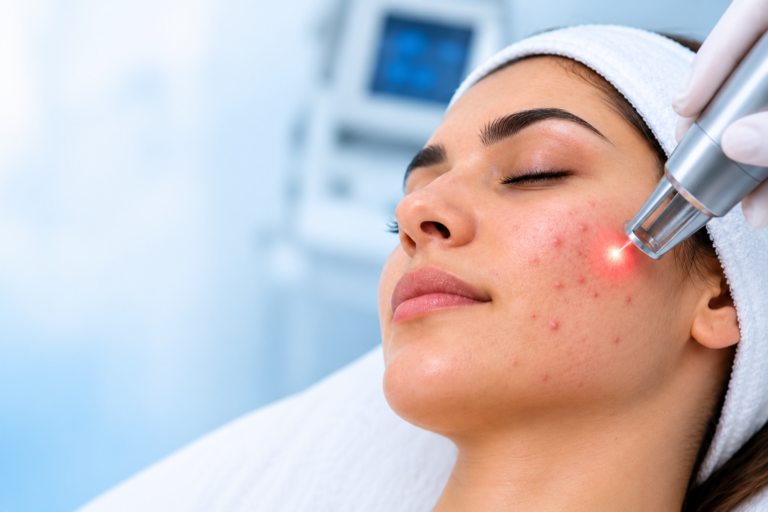
- Red acne marks (post-inflammatory erythema): The persistent pink-red marks that linger long after active acne resolves.
- Brown spots and solar lentigines: Discrete hyperpigmented lesions from sun exposure, commonly called age spots or liver spots.
For more on how vascular laser treatment can help with persistent redness after acne, read our guide to vascular laser treatment for acne.
The 1064 nm Wavelength: Deeper Vascular Structures
The 1064 nm Nd:YAG wavelength penetrates significantly deeper into the dermis, reaching vascular structures that are less accessible to the 532 nm wavelength:
- Leg veins: Small to medium reticular and telangiectatic leg veins that are too fine for sclerotherapy or represent a complement to it.
- Blue veins under the eyes: A concern requiring particular care, as the periorbital skin is delicate and requires precise energy delivery.
- Deeper vascular lesions that fail to respond to shorter-wavelength approaches.
- Skin tightening support: The 1064 nm wavelength also stimulates collagen remodeling, providing a secondary tightening benefit through gentle dermal heating.
One of the most clinically useful aspects of the Excel V+ is that mixed lesions, those with both red and brown components, can be addressed in the same treatment session, using both wavelengths sequentially. This is particularly valuable for patients with complex sun damage or rosacea complicated by pigmentary changes.
Conditions Treated by Vascular Laser at Trillium Clinic
Rosacea
Rosacea is one of the most common conditions treated with the Excel V+ laser. It is a chronic inflammatory condition that causes facial redness, visible blood vessels, and in some patients, papules and pustules that are often confused with acne. Rosacea cannot be cured, but its vascular manifestations, the persistent background redness and the telangiectasias, can respond well to vascular laser treatment.
Patients with rosacea typically see meaningful reduction in baseline redness after one to three treatment sessions, with continued improvement as treated vessels clear. Maintenance treatments are often recommended every six to twelve months, particularly for patients with significant sun exposure or other triggering factors. Vascular laser does not replace topical or oral rosacea therapy; it can be incorporated into a comprehensive rosacea management plan when appropriate.
Facial Spider Veins and Broken Capillaries
Facial telangiectasias, those fine red lines that appear around the nose, across the cheeks, and at the outer corners of the nose, are among the most satisfying conditions to treat with the Excel V+. They often respond well to the 532 nm wavelength, typically clearing within one to two sessions. The laser energy is delivered in precise pulses that trace the vessel, causing it to fade without leaving any surface disruption.
Cherry Angiomas
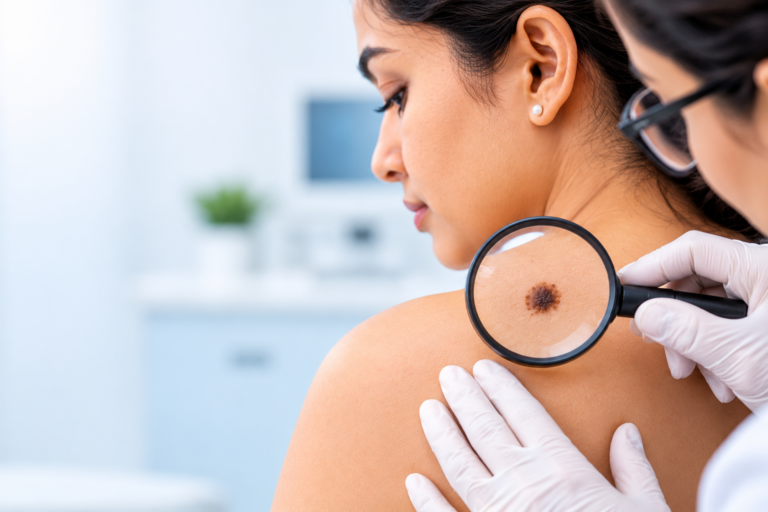
Cherry angiomas are benign vascular proliferations that develop on most adults in increasing numbers with age. They are benign and generally harmless, but can be cosmetically bothersome. A single Excel V+ treatment session may clear many cherry angiomas, with minimal discomfort and little recovery time.
Brown Spots and Sun Damage
The 532 nm wavelength’s affinity for melanin makes it useful for selected superficial pigmented lesions, including solar lentigines and freckles. These lesions typically darken briefly after treatment as the pigment absorbs the laser energy, then crust and shed over seven to fourteen days, leaving significantly clearer skin beneath. For patients with extensive photodamage across the face, chest, or hands, a series of treatments can help improve uneven tone.
Poikiloderma of Civatte
Poikiloderma, the combination of redness, pigmentation, and mild skin atrophy that develops on the lateral neck and upper chest, is a notoriously difficult condition to treat with topical products alone. The Excel V+, using both wavelengths in combination, addresses the vascular and pigmented components simultaneously, producing meaningful improvement in the mottled appearance that patients find so aging and difficult to camouflage.
Leg Veins
For small-caliber leg veins, the fine red and blue telangiectasias that appear on the thighs, calves, and ankles, the 1064 nm wavelength of the Excel V+ offers a needle-free alternative or complement to sclerotherapy. Patients who are averse to injections or who have isolated areas of fine vessels respond well to laser treatment. An individual evaluation helps determine the most effective approach, whether laser alone, sclerotherapy alone, or a combination of both.
What to Expect: The Treatment Experience
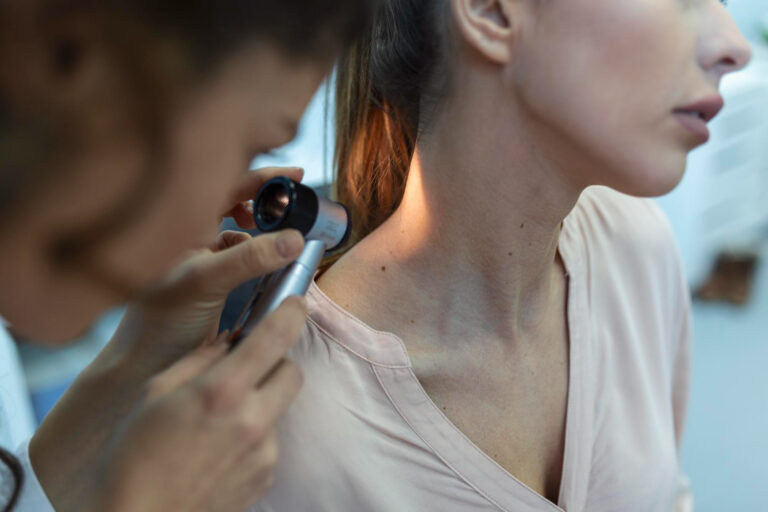
Every vascular laser treatment begins with a thorough consultation. The physician evaluates your skin type, reviews your medical history, and documents your specific vascular and pigment concerns. The Excel V+ is then calibrated to your individual parameters: wavelength, pulse duration, spot size, and fluence, based on the nature of the lesion and your Fitzpatrick skin type.
The Excel V+ incorporates contact cooling technology, which helps reduce discomfort during treatment. Most patients describe the sensation as a brief snap or warmth with each pulse, well tolerated without topical anesthesia in most cases, though numbing cream is available for sensitive patients or more extensive treatments.
Treatment sessions typically last twenty to forty-five minutes depending on the area covered. Immediately following treatment, some redness and mild swelling are normal and generally resolve within a few hours. Treated pigmented lesions may darken before they shed. Most patients return to normal activities the same day.
Results improve progressively over two to six weeks as treated vessels are reabsorbed and pigmentation clears. Most conditions require one to three sessions spaced four to six weeks apart, though maintenance is often beneficial for chronic conditions like rosacea.
Why Choose a Board-Certified Dermatologist for Vascular Laser Treatment?
Vascular laser treatment with the Excel V+ is not a one-size-fits-all procedure. The same device can produce different outcomes and carry different risks depending on who operates it. Incorrect wavelength selection, excessive energy delivery, or inadequate cooling can result in blistering, hyperpigmentation, or scarring. In darker skin types, the risk of adverse effects is particularly elevated when treatment parameters are not carefully individualized.
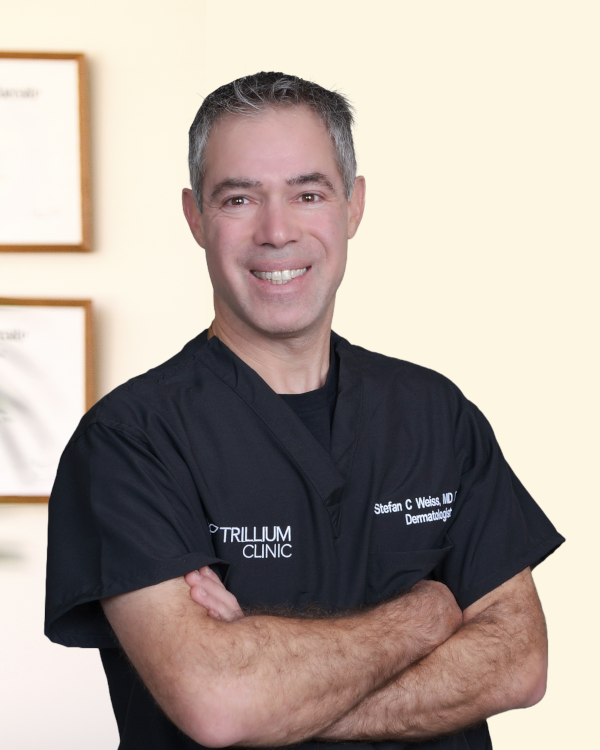
At Trillium Clinic, all Excel V+ treatments are performed directly by Dr. Stefan Weiss, not delegated to a technician or aesthetician. With over 20 years of clinical experience in medical and cosmetic dermatology, and a deep understanding of laser physics and tissue interactions, Dr. Weiss brings extensive expertise to every treatment. This level of physician involvement provides an important distinction from treatment settings without direct physician oversight.
That is the Trillium Clinic standard: physician-led, evidence-based, individualized care.
Book Your Vascular Laser Consultation at Trillium Clinic
Trillium Clinic Dermatology serves patients throughout North Carolina from three convenient locations: Chapel Hill (100 Timberhill Place, Suite 110), Smithfield (332 N Brightleaf Blvd, Suite C), and Burlington (2961 Crouse Lane, Suite A). Patients travel to Trillium Clinic from Durham, Raleigh, Cary, Hillsborough, Mebane, Greensboro, and beyond for vascular laser care that combines advanced technology with dermatologic expertise.
If redness, rosacea, visible veins, or brown spots are affecting your confidence or quality of life, a consultation can help determine whether vascular laser treatment is appropriate for your concerns. A consultation with Dr. Weiss is the first step toward understanding your treatment options and working toward clearer, more even skin.
Call 919-710-8100, text 919-823-5681, or book your appointment online.
Stefan C. Weiss, MD, FAAD, is a board-certified dermatologist, founder of Trillium Dermatology, and Adjunct Professor of Dermatology at Brown University. He trained at Duke University School of Medicine and completed his residency at Stanford University Medical Center.
Frequently Asked Questions
Vascular laser treatment can help address several vascular and superficial pigmented concerns, including persistent facial redness, rosacea-related redness, spider veins, broken capillaries, cherry angiomas, port wine stains, poikiloderma of Civatte, red acne marks, and certain brown spots. The Excel V+ can also treat selected small-caliber leg veins. The appropriate wavelength and treatment settings depend on the condition and the depth of the target.
Yes. The Excel V+ uses two wavelengths: 532 nm and 1064 nm. The 532 nm wavelength addresses superficial vascular and pigmented concerns, while the 1064 nm wavelength reaches deeper vascular structures. When a lesion has both red and brown components, the physician may use both wavelengths sequentially during the same session.
The number of sessions depends on the condition being treated and the individual response. Most conditions require one to three sessions, typically spaced four to six weeks apart. Patients with chronic conditions such as rosacea may benefit from maintenance treatments, often every six to twelve months.
Most patients experience some redness or mild swelling after treatment, which generally resolves within a few hours. Treated pigmented spots may darken before crusting and shedding over the following seven to fourteen days. Most patients can return to their normal activities the same day, although recovery varies depending on the area and concern treated.
No. Rosacea is a chronic inflammatory condition that cannot currently be cured. However, vascular laser treatment can help reduce its visible vascular symptoms, including persistent background redness and visible blood vessels. It may be used as part of a broader rosacea management plan, alongside topical or oral treatments when appropriate.