Last updated: October 30, 2026
If you have eczema (atopic dermatitis), moisturizer is part of your treatment, not just skin care. The American Academy of Dermatology (AAD) recommends moisturizer for everyone with atopic dermatitis, because well-moisturized skin is less likely to crack, itch or get infected.
This guide covers how to choose a moisturizer, how and when to apply it, and the everyday habits that help prevent flare-ups. For prescription options, see our eczema treatment guide.
Why moisturizer matters so much with eczema
Eczema creates tiny cracks in the skin, so it loses water quickly. That’s why eczema-prone skin feels so dry. Keeping it moisturized helps rebuild the barrier between your skin and the world, and applying moisturizer regularly can even reduce how much eczema medicine you need.
How to choose a moisturizer for eczema
- Go thick: choose a cream or ointment rather than a lotion. Thicker products hold more moisture and are less likely to irritate.
- Fragrance-free: look for “fragrance free” on the label. Avoid products labeled “unscented”, which can still contain fragrance that’s been masked.
- Helpful ingredients: petrolatum, shea butter and silicones are good choices for eczema-prone skin.
- Keep it simple: plain petroleum jelly is an inexpensive, fragrance-free option that works well for many people.
| Type | How thick | Good for |
|---|---|---|
| Lotion | Thinnest | Usually too light for eczema |
| Cream | Thicker | Daily use on eczema-prone skin |
| Ointment or petroleum jelly | Thickest | Very dry, cracked or severe eczema |
Finding the right product can take some trial and error. Your dermatologist can also prescribe or recommend a moisturizer if over-the-counter ones aren’t enough.
Test new products first
Fragrance isn’t the only ingredient that can trigger a flare. Before using a new product, apply a quarter-sized amount to the inside of your arm once a day for 7 to 10 days. If your skin stays clear, it’s likely safe to use.
How and when to apply moisturizer
- After every bath or shower: keep it to 5 to 10 minutes in warm water, gently pat your skin partly dry, then moisturize while your skin is still damp to lock in water.
- If you use a medicated cream: apply the medicine first, as directed, then put moisturizer on top of it and on the rest of your skin.
- At least twice a day, and whenever your skin feels dry.
- Take your time: gently massage it into your skin.
Bathing tips
- Use warm, not hot, water and keep baths and showers short.
- Use a mild, fragrance-free cleanser, and only where you need it. Skip bubble bath.
- If your eczema often gets infected, ask your dermatologist whether diluted bleach baths are right for you.
For severe itching
Ask your dermatologist about wet wrap therapy, which can calm swelling and the urge to scratch. Keeping fingernails short and smooth, and wearing cotton gloves at night, can help prevent scratching from breaking the skin.
Clothing, laundry and everyday triggers
- Wear loose, 100% cotton clothing, and never wool next to your skin.
- Use fragrance-free, dye-free laundry detergent, and wash new clothes before wearing them.
- Remove scratchy tags, and cover irritating seams with silk.
- Use cotton towels and sheets.
- Protect your skin from extremes: cold air dries skin out, and sweat from overheating can trigger a flare.
In winter, these steps matter even more. See our guide to winter skin flare-ups.
When moisturizer isn’t enough
See a board-certified dermatologist if your eczema keeps flaring despite good skin care, or if your skin cracks, oozes or looks infected. A dermatologist can build a plan that combines eczema-friendly skin care, trigger management and, when needed, prescription creams, pills, injections or light therapy. Learn more about atopic dermatitis care at Trillium and the newest treatments for atopic dermatitis.
Struggling to keep eczema under control? Book an appointment at Trillium in Chapel Hill, Smithfield or Burlington. Call 919-710-8100 or schedule online.
Frequently asked questions
A thick, fragrance-free cream or ointment. Products with petrolatum, shea butter or silicones work well, and plain petroleum jelly is an inexpensive option that suits many people. Lotions are usually too light.
An ointment or petroleum jelly, which is the thickest and holds in the most moisture. If over-the-counter products aren't enough, a dermatologist can prescribe a moisturizer or treatment.
At least twice a day, right after every bath or shower while your skin is still damp, and whenever your skin feels dry.
Apply the medicated cream first, as directed, then put moisturizer on top and over the rest of your skin.
Not always. "Unscented" can mean a fragrance has been masked, and it can still trigger a flare. Look for products labeled "fragrance free" instead.
Test it first: apply a quarter-sized amount to the inside of your arm once a day for 7 to 10 days. If your skin stays clear, it's likely safe to use.
About Dr. Weiss
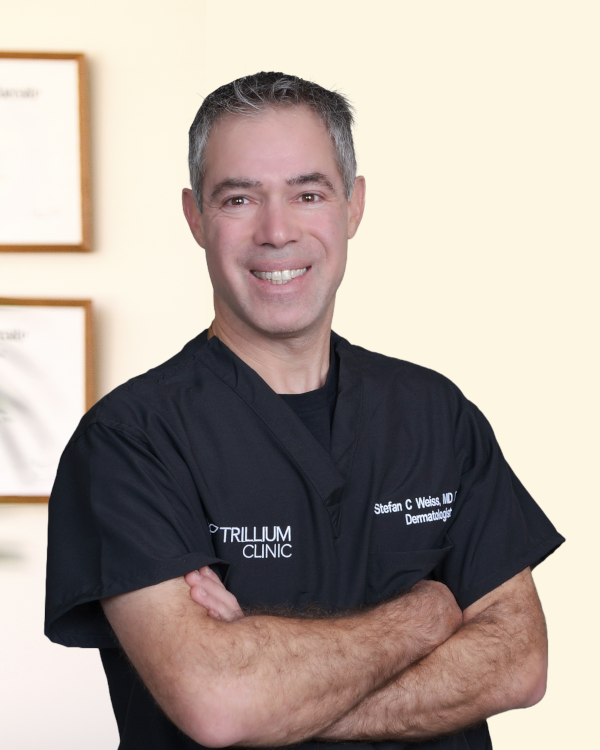
Stefan C. Weiss, MD, FAAD, is a board-certified dermatologist, the medical director of Trillium Clinic and an adjunct professor of dermatology at Brown University. He trained at Duke University School of Medicine and Stanford University Medical Center, has authored more than 100 peer-reviewed abstracts, posters and manuscripts, and has over two decades of experience in medical and cosmetic dermatology.
References
- American Academy of Dermatology. 7 dermatologists’ skin care tips that can relieve symptoms of atopic dermatitis.
- American Academy of Dermatology. Atopic dermatitis: self-care.
- American Academy of Dermatology. How to reduce eczema flares with moisturizer.
- American Academy of Dermatology. Atopic dermatitis: diagnosis and treatment.
- American Academy of Dermatology. Your winter skin survival kit.
This article is for general education and isn’t a substitute for personal medical advice. A board-certified dermatologist can tell you which treatment is right for you.