Last updated: October 25, 2026
Glass skin is a Korean beauty term for skin that looks smooth, clear, even-toned and so well hydrated it almost reflects light. It isn’t a medical term, and it doesn’t mean skin with no pores or texture. Every face has pores. What you can get is healthy, hydrated, even skin, and a simple routine you stick to does more than a 10-step one you don’t.
Here’s a dermatologist-approved routine, the ingredients worth using, and the treatments that can take your skin further.
What glass skin really looks like
- Even tone. Fewer dark spots and less redness.
- Smooth texture. Skin feels soft, with fewer rough patches.
- A hydrated glow. A healthy sheen rather than oiliness.
- Fewer breakouts. Calm, clear skin.
A simple glass skin routine
| Step | When | What to use | Why it matters |
|---|---|---|---|
| 1. Cleanse | Morning and night, and after sweating | A gentle, non-abrasive cleanser with lukewarm water. Pat dry. | Clears oil and dirt without stripping the skin |
| 2. Hydrate | Morning and night | A toner, essence or serum with glycerin or hyaluronic acid | Draws water into the skin for that dewy look |
| 3. Treat | Vitamin C in the morning, a retinoid at night | Start slowly, a few nights a week for retinoids | Helps fade dark spots and even out tone |
| 4. Moisturize | Right after the steps above | A cream or lotion suited to your skin type | Locks in hydration and supports the skin barrier |
| 5. Protect | Every morning | Broad-spectrum sunscreen, SPF 30 or higher | Prevents new dark spots and protects your results |
The American Academy of Dermatology recommends washing your face twice a day and after sweating heavily, and applying moisturizer right after to keep skin hydrated.
How to exfoliate without damaging your skin
Exfoliating removes dead skin cells and can make skin look brighter, but overdoing it causes redness and irritation. The AAD’s advice on exfoliating safely:
- Match the method to your skin. Dry, sensitive or acne-prone skin usually does better with a mild chemical exfoliant, such as an alpha or beta hydroxy acid, than with scrubs.
- Go easy if you use a retinoid or benzoyl peroxide. These already make skin more sensitive.
- Be careful with darker skin. Strong exfoliation can trigger new dark spots.
- Don’t over-exfoliate. The stronger the exfoliant, the less often you need it.
- Skip it on broken or sunburned skin, and moisturize afterward.
Ingredients that help, and what to skip
| Use | Why |
|---|---|
| Glycerin, hyaluronic acid | Draw water into the skin. The AAD lists both among moisturizing ingredients for dry skin. |
| Vitamin C, azelaic acid, a retinoid | Help fade dark spots and even out skin tone |
| Alpha and beta hydroxy acids | Gentle chemical exfoliation for smoother texture |
| Broad-spectrum sunscreen | The single most important step for even tone |
| Skip or limit | Why |
|---|---|
| Harsh scrubs | Can irritate the skin and cause dark spots, especially on darker skin |
| Hot water | Dries out the skin |
| Fragranced products, if your skin is sensitive | Gentler, fragrance-free products are less likely to irritate |
| Stacking several strong actives at once | Raises the risk of redness and peeling |
Common glass skin myths
- “Glass skin means no pores.” Pores are normal. A good routine can make skin look smoother, but it won’t erase them.
- “More steps means better skin.” Consistency matters more than the number of products.
- “You need a filter-like finish every day.” Real skin has texture. Healthy and even is a realistic goal.
Professional treatments for next-level glow
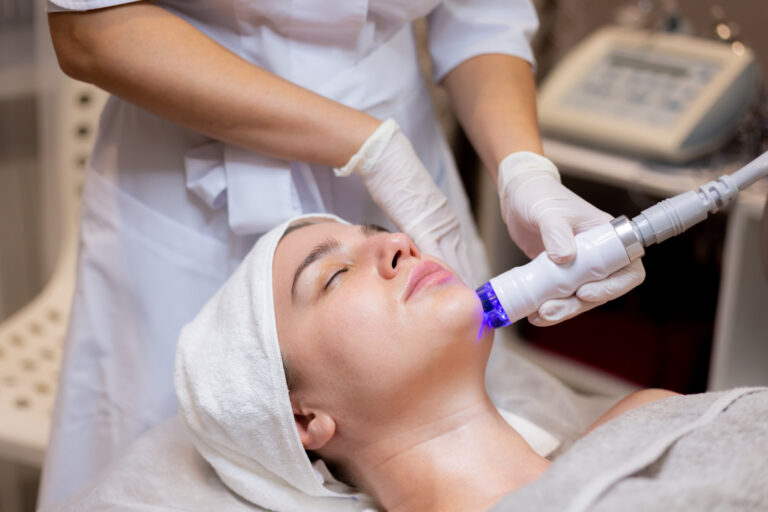
If your routine has taken you as far as it can, these treatments at Trillium can help with specific concerns:
| Concern | Treatments at Trillium |
|---|---|
| Dullness and uneven tone | Chemical peels and medical facials, such as glycolic or microdermabrasion facials |
| Dark spots and hyperpigmentation | Chemical peels and laser for brown spots |
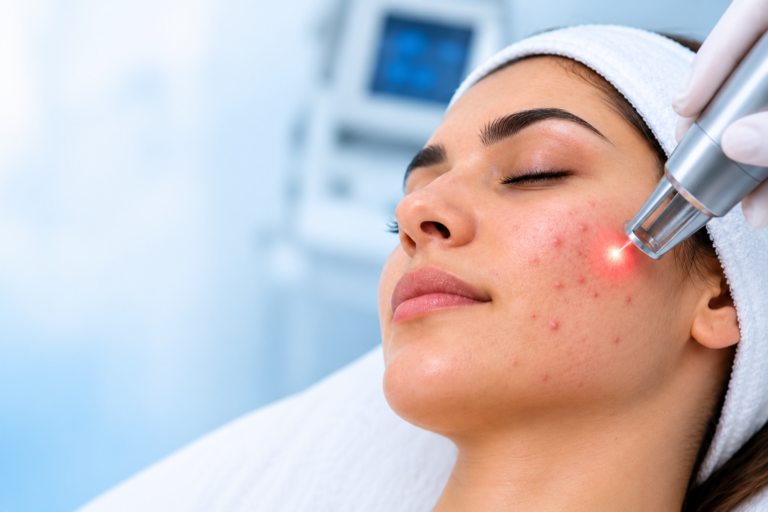
| Rough texture, fine lines and acne scars | Microneedling and laser resurfacing |
| Breakouts | Acne treatment |
For more on peels, read the benefits of chemical peels and chemical peels for hyperpigmentation.
Glass skin treatment in Chapel Hill, Smithfield and Burlington
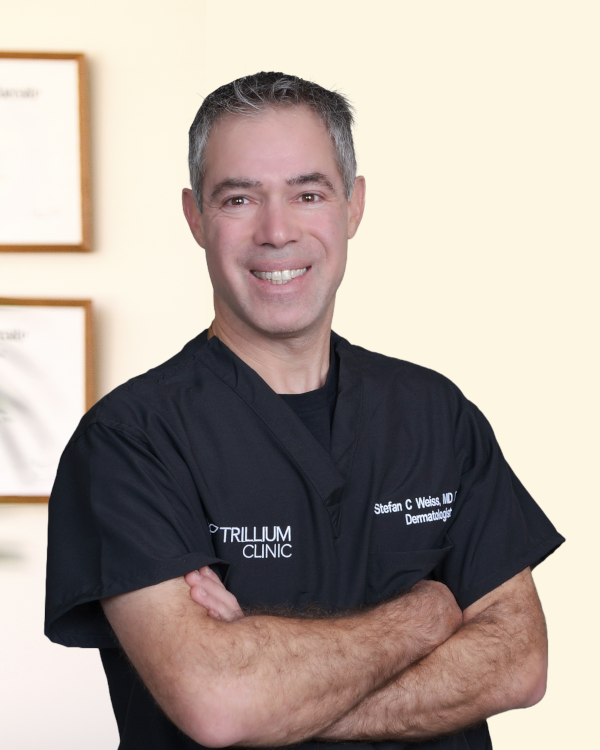
Board-certified dermatologist Dr. Stefan Weiss can look at your skin, simplify your routine and recommend treatments that fit your skin type and goals. Book a consultation to get started.
Frequently asked questions
Glass skin is a Korean beauty term for smooth, clear, even-toned skin that looks deeply hydrated. It's a look, not a medical condition, and it doesn't mean skin without pores.
Hydration and glow can improve quickly with a consistent routine. Dark spots and rough texture take longer, often months, and professional treatments can speed things up.
Yes. Use a gentle cleanser, lightweight non-comedogenic products and a mild chemical exfoliant, and get breakouts under control first.
It depends on your skin type and the product. Gentle exfoliants can be used more often than strong ones. If your skin turns red or stings, cut back.
Yes. A dermatologist can simplify your routine, treat acne, redness or dark spots that get in the way, and recommend treatments like chemical peels or microneedling.
It depends on your main concern. Chemical peels and medical facials help dullness and uneven tone. Microneedling and laser resurfacing help texture and scars.
About Dr. Weiss
Stefan C. Weiss, MD, FAAD, is a board-certified dermatologist, the medical director of Trillium Clinic and an adjunct professor of dermatology at Brown University. He trained at Duke University School of Medicine and Stanford University Medical Center, has authored more than 100 peer-reviewed abstracts, posters and manuscripts, and has over two decades of experience in medical and cosmetic dermatology.
References
- American Academy of Dermatology. How to safely exfoliate at home.
- American Academy of Dermatology. Face washing 101.
- American Academy of Dermatology. Dermatologists’ top tips for relieving dry skin.
- American Academy of Dermatology. How to fade dark spots in darker skin tones.
- American Academy of Dermatology. Chemical peels: Overview.
This article is for general education and isn’t a substitute for personal medical advice. A board-certified dermatologist can tell you which treatment is right for you.