Last updated: October 23, 2026
Yes, dermatologists do chemical peels. They’ve performed them for more than 50 years, according to the American Academy of Dermatology. Many dermatology practices also run a med spa, where trained skincare staff apply lighter peels.
The setting matters less than three things: who looks at your skin first, how strong the peel is, and who’s on hand if something goes wrong.
Dermatology practice, med spa or day spa?
| Setting | Who usually applies the peel | Peel strengths | Medical oversight |
|---|---|---|---|
| Dermatology practice | A dermatologist, or trained staff under their direction | Mild to deep. Deep peels are done only in a surgical setting. | A physician on site |
| Med spa inside a dermatology practice | Licensed skincare staff | Mild to moderate | Dermatology providers in the same practice |
| Stand-alone med spa | Varies widely | Usually mild to moderate | Varies. A survey of 127 Chicago-area med spas found no on-site physician at 81% of them. |
| Day spa or salon | Estheticians | The lightest, cosmetic-strength peels | None |
The med spa figure comes from a 2023 study reported by the American Society for Dermatologic Surgery. It covered one region, so treat it as a sign of how much oversight can vary, not a national rate.
Why the person doing your peel matters
The AAD’s own warning is blunt: results depend largely on the skill of the person performing the peel. A peel is timed to your skin’s reaction, and the same acid can be gentle on one face and too strong on another.
In experienced hands, side effects are usually mild. The AAD lists:
- redness that can last for months
- temporary darkening of the skin
- lighter skin color, mainly after medium and deep peels
- scarring, which is very rare when a dermatologist performs the peel
The AAD adds that people with darker skin can safely have a peel, but should see someone with expertise in darker skin tones. Without that, permanent pigment problems can develop.
When to choose a dermatology practice
A spa peel can be fine for healthy skin when you want a refresh. A dermatology setting is the better choice if you:
- have medium to dark skin and worry about dark marks
- have melasma, acne or acne scars
- use prescription acne medicine, or have ever taken isotretinoin
- get cold sores, which may need antiviral medicine before a peel
- have eczema, psoriasis, rosacea, lupus or another skin condition
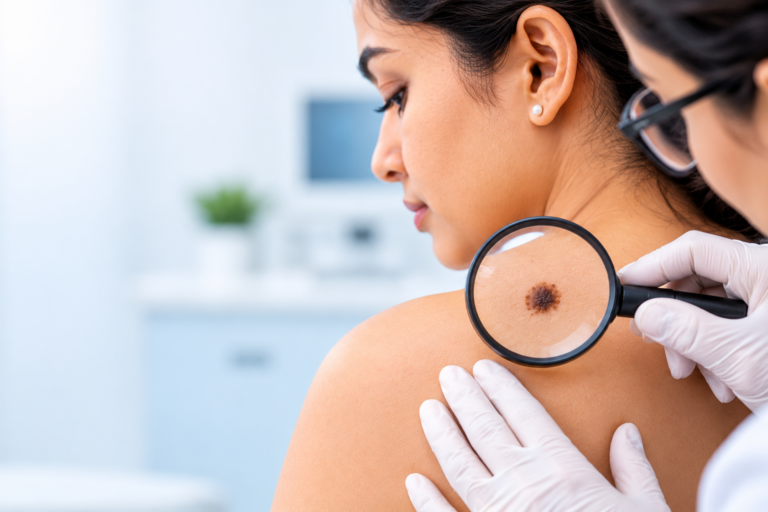
- have a spot that’s new, changing or hasn’t been checked. A peel shouldn’t go over an undiagnosed growth.
- want a medium-depth peel
Questions to ask before you book
The AAD suggests asking these before any chemical peel:
- Who will apply the peel, and how many have they done on skin like mine?
- What do I need to do before and after the peel?
- What results can I realistically expect, and after how many sessions?
- What side effects are possible, and am I at higher risk for any?
- How much downtime will I have?
- Can I see before-and-after photos?
- Would another treatment, or a combination, work better for me?
Also tell the provider about every medicine and supplement you take, any isotretinoin use, past cold sores, past cosmetic treatments and whether you scar easily.
How chemical peels work at Trillium
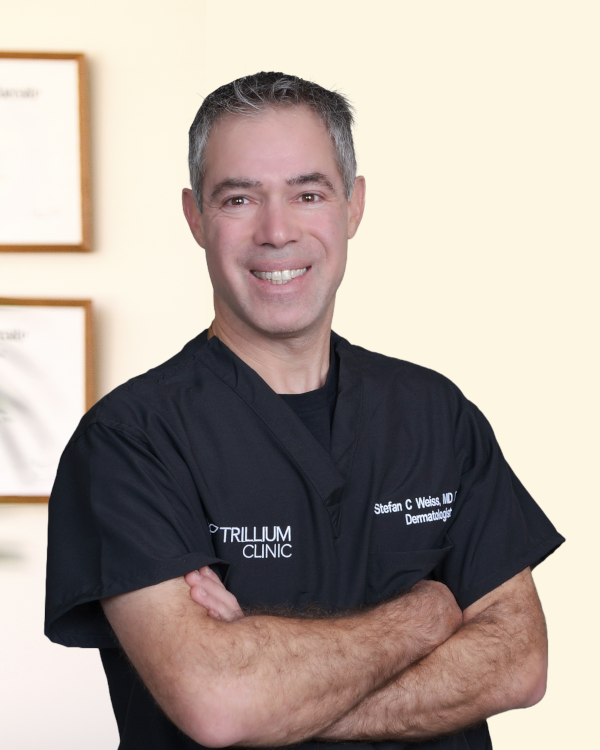
Trillium Med Spa is part of Trillium Clinic, a dermatology practice whose medical director is board-certified dermatologist Dr. Stefan Weiss. Dr. Weiss performs the chemical peels himself, so the doctor who assesses your skin and chooses your peel is the one who applies it.
- Strengths: mild to moderate peels only, which need little downtime.
- Options: salicylic acid, glycolic, lactic and TCA peels, brightening glutathione and kojic acid peels, and VI Peel.
- Approach: every peel is customized and starts mild, then steps up as your skin allows.
- Sessions: 4 to 8 peels spaced 10 to 14 days apart is typical.
- Combinations: peels can be paired with fillers, Botox, AviClear or laser resurfacing when one treatment isn’t enough.
See our chemical peels page for details, or read are chemical peels safe? for side effects and recovery.
Chemical peels in Chapel Hill, Smithfield and Burlington
Not sure which peel, or whether a peel is right at all? Book a consultation and our team will look at your skin before recommending a treatment.
Frequently asked questions
Yes. Dermatologists have performed chemical peels for more than 50 years. At Trillium, board-certified dermatologist Dr. Stefan Weiss performs the peels himself.
For healthy skin and a light refresh, a spa peel can be fine. For darker skin, acne, melasma, scars, a skin condition or a stronger peel, a dermatology setting is safer because a medical provider assesses your skin first.
There's no official definition. The term usually means a stronger formula sold only to medical practices, such as VI Peel, applied by trained staff.
Yes, estheticians can apply lighter peels. Which strengths they can use depends on state rules and on whether they work under a physician.
It's a good idea. A consultation checks your skin type, medicines and history of cold sores or scarring, which all affect which peel is safe for you.
That depends on your goal. See our guides to peels for acne, acne scars and dark marks and skin of color.
About Dr. Weiss
Stefan C. Weiss, MD, FAAD, is a board-certified dermatologist, the medical director of Trillium Clinic and an adjunct professor of dermatology at Brown University. He trained at Duke University School of Medicine and Stanford University Medical Center, has authored more than 100 peer-reviewed abstracts, posters and manuscripts, and has over two decades of experience in medical and cosmetic dermatology.
References
- American Academy of Dermatology. Chemical peels: FAQs.
- American Academy of Dermatology. Chemical peels: Preparation.
- American Society for Dermatologic Surgery Association. Safety concerns in med spas with little to no physician involvement. October 2023.
This article is for general education and isn’t a substitute for personal medical advice. A board-certified dermatologist can tell you whether a chemical peel is right for you.