Last updated: October 21, 2026
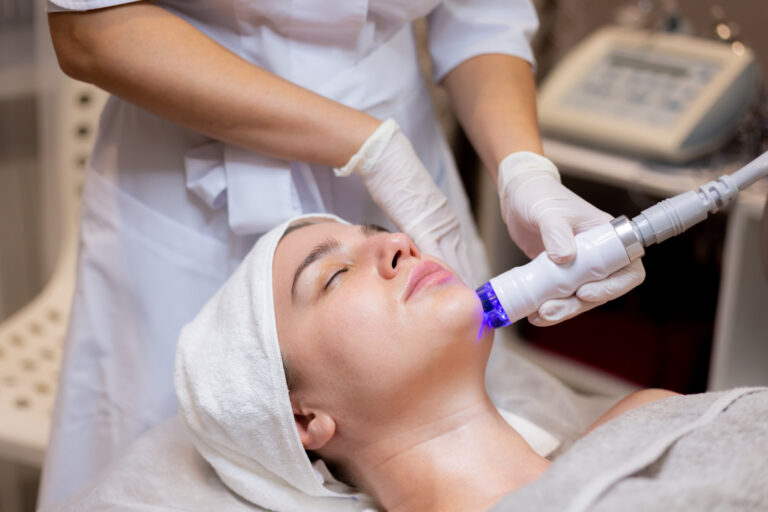
Yes. For the right person, fractional CO2 laser is one of the most effective treatments for wrinkles, acne scars, sun damage and rough texture. It’s an ablative laser, though, so it has real downtime and isn’t the right choice for every skin type or concern.
This guide explains what CO2 laser treatment can do, whether it’s safe, how it works, what recovery looks like day by day, the side effects and what affects the cost. If your main concern is the under-eye area, see our CO2 laser under eyes guide.
Quick answers
| Question | Short answer |
|---|---|
| Is it safe? | Generally yes, when a skilled, licensed dermatologist chooses the settings |
| What does it treat best? | Fine lines and wrinkles, acne and surgical scars, sun damage, age spots and rough texture |
| Does it tighten skin? | Yes, mild to moderate loose skin |
| How long is the downtime? | About 7–10 days of redness, swelling and peeling, up to 2 weeks for deeper treatments; pinkness can last several weeks |
| When will I see results? | Skin looks smoother at about 2 weeks; collagen keeps building for 3–6 months |
| How many sessions? | Results are often achieved in one session; a series of 3 is typical for the most significant results, then an annual maintenance treatment |
| How much does it cost? | It varies by area and depth. The U.S. average for laser skin resurfacing is about $1,829 before facility and medication costs (ASPS); not covered by insurance |
Is CO2 laser safe?
CO2 laser treatment is generally regarded as safe when a skilled, licensed medical practitioner performs it. As with any cosmetic procedure, there are risks, and most of them depend on who chooses the settings and how well the skin is cared for afterward.
It may not be safe right now, or another treatment may suit you better, if you:
- Have an active skin infection or a cold sore in the area
- Take isotretinoin, or have stopped it recently
- Have a fresh tan or sunburn
- Have a history of keloids or thick scars
- Have a condition that slows healing, such as poorly controlled diabetes
- Are pregnant or breastfeeding
Darker skin tones. CO2 laser can still be an option, but the risk of temporary dark patches (post-inflammatory hyperpigmentation) is higher. Gentler settings, skin preparation beforehand or a non-ablative laser may be safer. The American Academy of Dermatology notes that darker skin is more prone to burns and dark marks after laser treatment, so experience with darker skin matters. Dr. Weiss decides this at the consultation.
What CO2 laser treats
CO2 laser improves the quality of the skin: its texture, tone and firmness. It doesn’t change the shape of the face or replace lost volume.
| Concern | Does CO2 laser help? | Often a better fit or add-on |
|---|---|---|
| Fine lines and wrinkles around the eyes and mouth | Yes, very well | Botox for lines that form when you move your face |
| Rough texture and sun damage | Yes, very well | — |
| Acne and surgical scars | Yes | — |
| Age spots and uneven pigmentation | Yes | — |
| Enlarged pores | Yes, moderately | — |
| Mild to moderate loose skin | Yes, moderately | Surgery for significant sagging |
| Visible blood vessels and redness | Rarely | Vascular laser |
| Lost volume and hollows | No | Dermal fillers |
CO2 laser for wrinkles
CO2 laser works best on fine lines and crepey skin caused by sun damage and collagen loss, which soften gradually over the 3–6 months after treatment. Lines from muscle movement often respond better to Botox, and deep folds to fillers; see our guide to CO2 laser for wrinkles, area by area.
How fractional CO2 laser works
The CO2 (carbon dioxide) laser emits light at a wavelength of 10,600 nanometers. Water in the skin absorbs this wavelength strongly, which lets the laser vaporize tiny columns of damaged tissue precisely.
“Fractional” means the laser treats the skin in a grid of microscopic columns and leaves the skin around each column untouched. That untreated skin speeds up healing and lowers the risk of complications compared with older lasers that removed the whole surface.
Two things happen as the skin heals:
- Resurfacing. The damaged outer layer peels away and is replaced by new, smoother skin.
- Collagen remodeling. The heat triggers the skin to build new collagen and elastin, which keeps improving firmness and texture for months.
Does CO2 laser tighten skin?
Yes, for mild to moderate loose skin. The American Academy of Dermatology describes laser resurfacing as the most effective non-surgical procedure for tightening loose skin. The tightening comes from new collagen, so it develops gradually over 3–6 months. CO2 laser can’t lift significant sagging, such as jowls or heavy eyelid skin; surgery does that.
What happens on treatment day
Preparation starts weeks before the treatment itself. These steps follow Trillium’s own CO2 laser pre-treatment instructions.
- Consultation. We take before photos, go over the plan and send in your prescriptions: an antibiotic, an antiviral to prevent cold sores, and Valium if you want it. We’ll also go over optional Pronox (nitrous oxide) for extra comfort.
- 4 weeks before. Avoid sun, tanning beds and self-tanner. If you’re tanned, treatment may need to be rescheduled.
- 1 week before. Stop tretinoin (Retin-A), glycolic acid, benzoyl peroxide and other harsh products on the treatment area.
- The day before. Start the antibiotic and antiviral as directed.
- Treatment day. Come with clean skin: no makeup, creams or contact lenses. A numbing cream goes on about an hour beforehand, and you wear protective eye shields throughout. Most people say the laser feels like being snapped with a rubber band. If you take Valium, someone needs to drive you home.
- Right after. Aquaphor is applied, and the skin feels sunburned and tight. A burning sensation can last up to about 5 hours.
Recovery day by day
The skin looks worse before it looks better. That’s normal and expected. Most people need about 7–10 days, and deeper treatments can take up to 2 weeks. The American Society for Dermatologic Surgery puts healing at 3–10 days depending on depth, and the American Society of Plastic Surgeons says CO2 recovery generally takes up to two weeks.
| Time after treatment | What’s normal | What to do |
|---|---|---|
| Day of treatment | Burning, tightness, sunburned look | Apply Aquaphor every 4–6 hours with clean hands; don’t wash your face; sleep with your head raised |
| Days 1–3 | Redness, swelling, a dark tan look; possibly a fine scab | Shower in cool water and let it run over your face; wash gently with the cleanser provided; keep up the Aquaphor; no strenuous exercise for at least 3 days |
| Days 3–7 | The skin darkens around days 3–4, then peels from about day 5 | Don’t pick or peel; switch to the repair cream provided twice a day from day 4 |
| About 1 week | Most peeling is done | Follow-up visit to plan your new skincare routine and when to restart makeup and retinoids. Don’t use old makeup or brushes before day 7 |
| Weeks 2–8 | Pinkness fades; collagen starts rebuilding | Mineral (zinc or titanium) sunscreen every day, plus a hat |
| Months 3–6 | Lines, scars and texture keep improving; some brown discoloration can linger for up to 6 months | Avoid direct sun for 6 months, even through a car window |
The full aftercare sheet is on our Treatment Instructions page. Call the office straight away if you have pain that’s getting worse instead of better, yellow crusting or pus, fever, new blisters, or swelling that keeps increasing after day 3.
Side effects and risks
Serious problems are uncommon when an experienced dermatologist chooses the settings. Know these before you book:
- Expected: redness, swelling and peeling for 7–10 days (up to 2 weeks for deeper treatments), then pinkness for several weeks
- Temporary dark patches: more likely in darker skin or after sun exposure; usually treatable
- Cold sore flare: the reason an antiviral is prescribed beforehand
- Infection: rare; follow the aftercare instructions closely
- Lighter patches or scarring: rare
Results: what to expect and when
Most people notice smoother, brighter skin once the peeling finishes, at about two weeks. The bigger change comes later: new collagen keeps forming for three to six months, so lines, scars and texture keep improving.
Results are frequently achieved in one session, and a series of 3 sessions is typically recommended for the most significant results. Dr. Weiss recommends an annual maintenance treatment after the first series. Results can last for years, but the skin keeps aging, so daily sunscreen protects the result. See real patient results in our Before/After Gallery.
Is CO2 laser worth it?
It’s usually worth it if your main concerns are wrinkles, scars, sun damage or texture, and you can take about a week off from work and social plans. Few non-surgical treatments improve these as much.
It may not be worth it if:
- You can’t take a week of downtime. A gentler, non-ablative laser or a series of peels has less downtime, with more modest results.
- Your main concern is volume loss, puffiness or significant sagging. Fillers or surgery fit those better.
- You can’t avoid the sun for the months after treatment.
How much does CO2 laser cost?
There’s no single price for CO2 laser. According to the American Society of Plastic Surgeons, the national average fee for skin resurfacing procedures such as laser skin resurfacing is $1,829. That figure doesn’t include facility, anesthesia or prescription costs, and prices vary by provider and location. Your own price is confirmed at your consultation and depends on:
- The area treated (one area or the full face)
- How deep the treatment is
- How many sessions you need (a series of 3 is typical)
CO2 laser for wrinkles and skin rejuvenation is cosmetic, so insurance doesn’t cover it. Trillium accepts the CareCredit health and beauty credit card:
- Special financing is available on purchases of $200 or more (subject to credit approval)
- You can check whether you prequalify online without affecting your credit score
- You can pay online up to 30 days before your appointment
Book a consultation
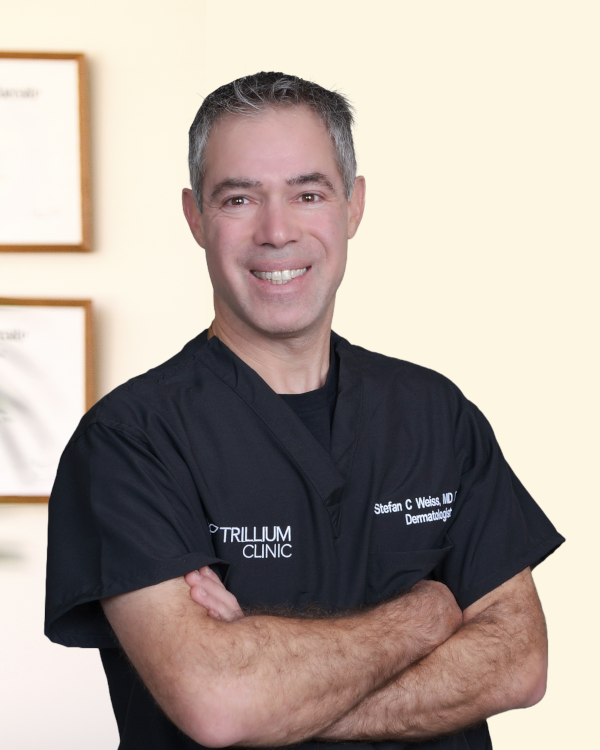
“Dr. Weiss has a great bedside manner and is very knowledgeable in his field.”
— Rickey M., Trillium Clinic patient (read more reviews)
Not sure whether CO2 laser is right for your skin? Dr. Weiss and the team will look at your concerns and recommend the option that fits, whether that’s CO2 laser, a gentler laser or a combination. Schedule a consultation online or call 919-710-8100.
CO2 laser consultations and treatments are available at all three Trillium offices: Chapel Hill, Smithfield and Burlington. See all laser skin resurfacing options.
Frequently asked questions
Yes, when a skilled, licensed dermatologist chooses the settings. The most common side effects are temporary redness, swelling and peeling. Infection and scarring are rare, and following the aftercare instructions lowers the risk further.
A numbing cream goes on about an hour before treatment. Most people say the laser feels like being snapped with a rubber band. Afterward the skin feels sunburned, and a burning sensation can last up to about 5 hours. Valium and Pronox (nitrous oxide) are available for extra comfort.
Results are frequently achieved in one session. For the most significant results, a series of 3 is typically recommended, followed by an annual maintenance treatment.
Results can last for years. The skin keeps aging, though, so daily sunscreen and an annual maintenance treatment help protect the result.
Plan on about 7–10 days of redness, swelling and peeling, or up to 2 weeks after a deeper treatment. Pinkness can last several weeks, and you should avoid direct sun for 6 months.
Yes. CO2 laser resurfaces the skin and builds new collagen, which improves the appearance of acne scars and surgical scars over several months.
It can be, but the risk of temporary dark patches is higher. Gentler settings, skin preparation or a non-ablative laser may be safer. Dr. Weiss decides this at the consultation.
Don't use old makeup or brushes before day 7. At your 1-week follow-up visit, we'll tell you when to restart makeup and your usual skincare.
This article is for general education and isn’t a substitute for personal medical advice. A board-certified dermatologist can tell you whether CO2 laser is right for you.