Last updated: October 21, 2026
Fractional CO2 laser is often called the gold standard for skin resurfacing because, for wrinkles, scars and sun damage, it usually gives the biggest improvement per treatment. It also has the most downtime. For many people, a gentler treatment is the better fit.
This guide compares CO2 laser with microneedling, chemical peels and non-ablative lasers, so you can see which one suits your skin, your goals and how much time you can take off. For safety, recovery and cost of CO2 laser itself, see our full-face CO2 laser guide.
Which treatment fits your goal?
| Your main goal | Usually the best fit |
|---|---|
| Deeper wrinkles, sun damage or loose skin, and you can take a week off | CO2 laser |
| Acne scars or texture, with little downtime, or you have darker skin | Microneedling |
| Dull skin, mild discoloration or rough texture | Chemical peel |
| Gradual improvement with almost no downtime | Non-ablative laser |
| Lines that appear only when you move your face | Botox (not a resurfacing treatment) |
Why CO2 laser is called the gold standard
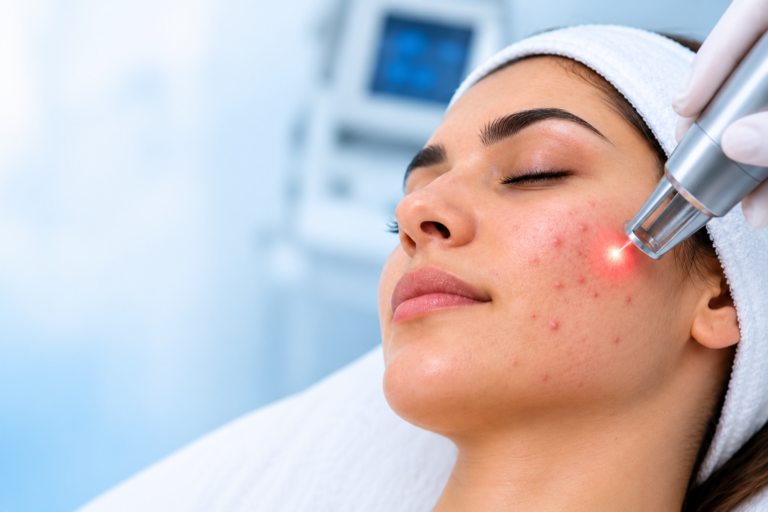
The CO2 (carbon dioxide) laser emits light at a wavelength of 10,600 nanometers. Water in the skin absorbs this wavelength strongly, so the laser can vaporize tiny columns of damaged skin with precision.
It’s an ablative laser: it removes a thin layer of skin and heats the skin underneath. That combination resurfaces the top layer and triggers new collagen deeper down. The American Society for Dermatologic Surgery lists CO2 as one of the two most common resurfacing lasers, used for wrinkles and scars. The American Academy of Dermatology describes laser resurfacing as the most effective non-surgical procedure for tightening loose skin.
Modern CO2 lasers are fractional. They treat the skin in a grid of microscopic columns and leave the skin around each column untouched, which speeds healing compared with older lasers that removed the whole surface.
CO2 laser vs microneedling, peels and non-ablative lasers
| CO2 laser (fractional, ablative) | Non-ablative laser | Microneedling | Chemical peel (superficial to medium) | |
|---|---|---|---|---|
| How it works | Removes a thin layer of skin and heats deeper layers | Heats the skin without breaking the surface | Fine needles make tiny channels that trigger healing | An acid solution makes the top layers peel |
| Best for | Wrinkles, sun damage, acne scars, rough texture, mild loose skin | Fine wrinkles, brown spots, minor scars | Acne and other scars, enlarged pores, texture, stretch marks | Mild discoloration, rough skin, age spots, fine lines |
| Typical downtime | About 7–10 days; up to 2 weeks for deeper treatments | Minimal; most people return to work right away | 2–7 days; makeup after 24 hours | Superficial 1–7 days; medium 7–14 days |
| Sessions | Results often after one session; a series of 3 for the most significant results, then annual maintenance | Multiple sessions in most cases | At least 3, monthly | Varies with peel strength |
| Darker skin | Higher risk of temporary dark patches; needs careful settings | Often a gentler option | Can be done on any skin color | Risk of color change; peel choice matters |
| At Trillium | Yes | Yes, a non-ablative CO2 setting; makeup after 48 hours | Yes, DermaPen | Yes, mild to moderate strengths |
Sources: ASDS laser resurfacing, ASDS non-ablative laser rejuvenation, ASDS microneedling, ASDS chemical peels, ASPS recovery.
CO2 laser vs microneedling
Both build collagen, but in different ways. CO2 laser removes damaged skin and heats deeper layers, so it usually does more for wrinkles, sun damage and loose skin. Microneedling leaves the surface mostly intact, so downtime is shorter and, according to the ASDS, it can be done on any skin color.
Choose microneedling if your main concern is acne scars or texture, you have darker skin, or you can’t take a week off. Choose CO2 laser if your main concern is wrinkles or sun damage and you can plan for the recovery.
CO2 laser vs chemical peel
Chemical peels range from light “lunchtime” peels to medium peels. Light peels refresh dull, rough skin and fade mild discoloration with little downtime. Medium peels reach deeper and treat age spots and fine lines, with 7–14 days of healing.
CO2 laser goes further than the mild-to-moderate peels Trillium offers, especially for wrinkles and scars. A peel is a good starting point if your skin mainly looks dull or uneven.
CO2 laser vs non-ablative lasers
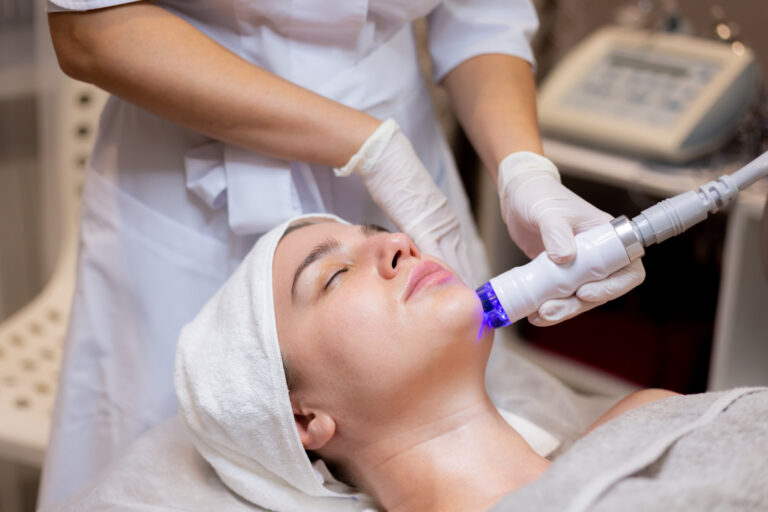
Non-ablative lasers heat the skin without injuring the surface. Recovery is minimal, but improvement is gradual and most people need several sessions. They can suit people who can’t take time off, or who have darker skin and need a gentler approach. Trillium’s CO2 laser can be used in a gentler, non-ablative setting as well as the standard ablative one, so Dr. Weiss can match the treatment to your skin. CO2 laser gives a bigger change per session in exchange for about a week of downtime.
When CO2 laser is the right choice
- Your main concerns are wrinkles, sun damage, acne scars or rough texture
- You want the biggest improvement from each session
- You can take about a week off and avoid the sun for months afterward
When a gentler treatment is better
- You can’t take a week of downtime
- You have darker skin and want to lower the risk of dark patches
- Your main concern is dullness or mild discoloration
- You have active acne; scars are usually treated once acne is under control
Combining treatments
Many people get the best result from a plan rather than a single treatment. Botox can relax lines caused by movement, fillers can restore lost volume, and CO2 laser or microneedling can improve the skin’s surface. At Trillium, microneedling can also be paired with exosomes or PRP. Dr. Weiss sets the order and timing at your consultation.
Book a consultation
“The doctor was thorough, was not rushed, and took time to make sure I understood everything he was saying and to answer all questions that I had.”
— Muskie C., Trillium Clinic patient (read more reviews)
Not sure which treatment fits your skin? Dr. Weiss and the team will look at your concerns, your skin type and how much downtime you can take, then recommend CO2 laser, a gentler option or a combination. Schedule a consultation online or call 919-710-8100.
Consultations are available at all three Trillium offices: Chapel Hill, Smithfield and Burlington. See all laser skin resurfacing options.
Frequently asked questions
For wrinkles and sun damage, CO2 laser usually gives a bigger improvement per session. Microneedling has less downtime and can be done on any skin color, so it's often the better choice for acne scars, texture or darker skin.
CO2 laser reaches deeper than mild and medium peels and does more for wrinkles and scars. A peel is a gentler starting point if your skin mainly looks dull, rough or uneven.
10,600 nanometers. Water in the skin absorbs this wavelength strongly, which lets the laser remove tiny columns of damaged skin precisely.
Ablative lasers, such as CO2, remove a thin layer of skin and heat the skin underneath. Non-ablative lasers heat the skin without breaking the surface, so recovery is shorter but results are more gradual.
Microneedling can be done on any skin color. CO2 laser can still be an option, but the risk of temporary dark patches is higher, so a gentler, non-ablative CO2 setting or a different treatment may be safer. Dr. Weiss decides this at the consultation.
With CO2 laser, results are frequently achieved in one session; a series of 3 is typically recommended for the most significant results, followed by annual maintenance. Microneedling usually needs at least 3 monthly sessions. Peels and non-ablative lasers vary with the treatment and your goals.
This article is for general education and isn’t a substitute for personal medical advice. A board-certified dermatologist can tell you whether CO2 laser is right for you.