Last updated: October 27, 2026
According to the American Society of Plastic Surgeons (ASPS), today’s patients want to look and feel more like themselves, not like someone else. That’s one reason non-surgical treatments remain the most popular cosmetic procedures: they use small injections, lasers or peels, and most let you get back to your day quickly.
This guide covers the innovative cosmetic procedures we see patients ask about most, what each one treats, how long results last and what recovery looks like. Every treatment listed here is available at Trillium, so you can talk any of them through at a consultation.
What’s new in 2026: what the latest numbers show
The ASPS 2025 Procedural Statistics Report, released in 2026, shows where cosmetic treatment is heading:
- Injectables still lead. Neuromodulators such as Botox made up 50% of all minimally invasive procedures, and HA fillers another 30%. Together that’s 80%.
- Volume restoration is growing. Facial fat grafting rose 39%, the biggest increase of any tracked procedure. It reflects a wider shift toward restoring lost volume, which is also why collagen stimulators like Sculptra and Radiesse are getting more attention.
- Weight loss medications are changing what patients ask for. 82% of ASPS surgeons reported consultations related to GLP-1 medications. After major weight loss, many people notice volume loss and looser skin in the face.
- Lasers remain a top choice. Laser skin treatments, IPL and hair removal stayed among the most performed minimally invasive procedures.
- Older adults are the fastest-growing group. Patients 66 and older had a 24% rise in cosmetic procedures, while adults 36 to 55 still make up nearly half of all patients.
If you’re losing weight with a GLP-1 medication, including through our medical weight loss program, fillers, collagen stimulators and skin tightening can help with facial volume loss and looser skin.
The bigger trend is a focus on skin quality and natural results: treatments that improve how your own skin looks and feels, rather than changing your features.
Botox, Dysport and Xeomin: softening expression lines
Neuromodulators are the most common minimally invasive cosmetic treatment. They relax the small muscles that cause frown lines, forehead lines and crow’s feet, which smooths the skin above them.
- The injections take about 10 to 15 minutes.
- Results show within a few days, reach their full effect in 1 to 2 weeks and last about 3 to 4 months, sometimes longer, according to the American Academy of Dermatology (AAD).
- There’s no real downtime. If a small bruise appears, it usually fades within about a week.
Learn more on our Botox, Dysport and Xeomin page.
Dermal fillers: restoring volume to lips, cheeks and under-eyes
Hyaluronic acid (HA) fillers add volume where the face has lost it with age. They’re used to shape lips, lift cheeks, soften smile lines and reduce hollows under the eyes.
- Results are immediate or close to it.
- HA fillers typically last 4 to 12 months, depending on the product and the area (AAD).
- Some swelling or bruising for a few days is common.
See our cosmetic fillers page for the areas we treat.
Sculptra and Radiesse: rebuilding collagen
Collagen stimulators work differently from HA fillers. Instead of only filling, they prompt your skin to make more of its own collagen, so results build gradually.
- Sculptra (poly-L-lactic acid) builds over several weeks to months and can last 1 to 3 years (AAD).
- Radiesse (calcium hydroxylapatite) gives some lift straight away, then keeps stimulating collagen. It typically lasts 6 months to 1 year (AAD).
- They suit people with gradual volume loss or thinning skin who want a subtle change over time.
SkinVive: an injectable skin booster
SkinVive is a microdroplet hyaluronic acid treatment that improves skin hydration and smoothness rather than adding volume. Results can show from about 1 week, peak at around a month and last up to 6 months. It’s a good option if your main concern is dull or dry-looking skin rather than lines or hollows.
Laser skin resurfacing: for wrinkles, texture and scars
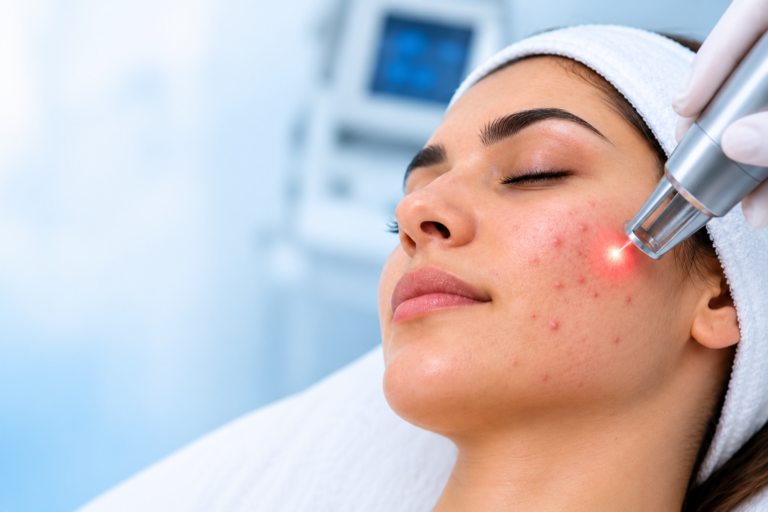
Fractional CO2 laser resurfacing removes thin columns of damaged skin and triggers new collagen as the skin heals. It treats wrinkles, uneven texture, sun damage and acne scars.
“CO2 laser resurfacing is my go-to for its transformative power,” says Dr. Stefan Weiss. Results improve gradually as the skin heals, and recovery time depends on how deep the treatment goes, so your dermatologist will plan it around your schedule.
Read more about laser skin resurfacing.
Non-invasive laser skin tightening
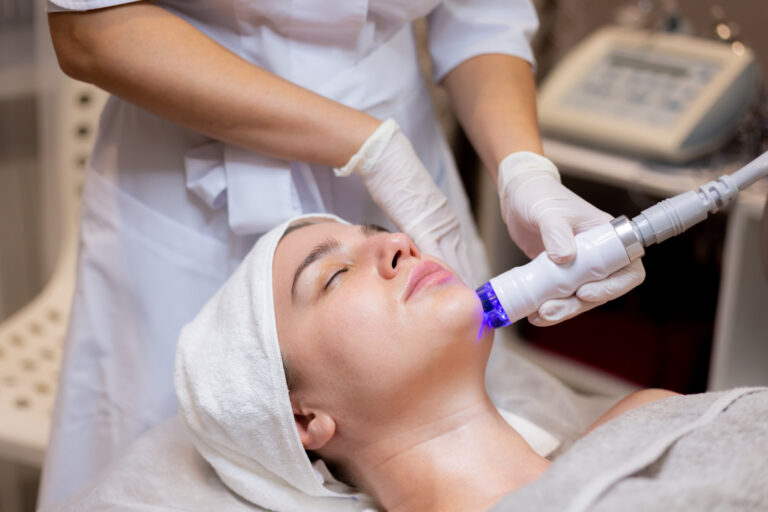
For mild to moderate loose skin, laser skin tightening heats the deeper layers of the skin to stimulate collagen without breaking the surface. According to the AAD, non-invasive tightening:
- Gives gradual, natural-looking results
- Has little or no downtime, usually just some redness and swelling
- Takes about an hour or less per session
- Is safe for people of all skin colors when done by a board-certified dermatologist
It won’t match a surgical facelift, but it can firm the skin with far less downtime and cost.
Vascular laser for redness and visible veins
Trillium uses the Cutera Excel V+ laser to treat facial redness, broken blood vessels and other visible veins. It can help with redness linked to rosacea. See our vascular laser page.
Chemical peels and microneedling
Chemical peels remove damaged outer layers of skin to improve tone, texture, dark spots and acne marks. Microneedling uses fine needles to create tiny channels that stimulate collagen, which helps with texture and acne scarring.
Both are offered at Trillium. See our microneedling and med spa chemical peels pages, or read our guides to chemical peel benefits and types and microneedling for acne scars.
Hair restoration
Thinning hair has many possible causes, so the first step is finding out why it’s happening. Trillium offers hair restoration treatments for men and women, and a dermatologist will check for underlying causes before recommending a plan.
Cosmetic treatments for men
The same treatments work well for men: Botox for forehead lines, fillers for jawline definition, laser resurfacing for texture and scars, and hair restoration. Doses and filler placement are planned around male facial anatomy, so results look natural. See cosmetic treatments for men.
Staying comfortable: Pro-Nox
If you’re nervous about discomfort, ask about Pro-Nox, a patient-controlled nitrous oxide option used during some cosmetic procedures.
Non-surgical cosmetic procedures at a glance
| Procedure | Best for | When you see results | How long results last |
|---|---|---|---|
| Botox, Dysport, Xeomin | Frown lines, forehead lines, crow’s feet | A few days; full effect in 1 to 2 weeks | About 3 to 4 months |
| HA fillers | Lips, cheeks, smile lines, under-eye hollows | Immediately | 4 to 12 months |
| Sculptra | Gradual volume loss, thinning skin | Builds over weeks to months | 1 to 3 years |
| Radiesse | Volume loss, lift, skin firmness | Immediately, then builds | 6 months to 1 year |
| SkinVive | Dull, dry-looking skin | From about 1 week, peaking at 1 month | Up to 6 months |
| Laser skin tightening | Mild to moderate loose skin | Gradually | Ask your dermatologist |
| CO2 laser resurfacing | Wrinkles, texture, sun damage, acne scars | As the skin heals | Ask your dermatologist |
Results vary from person to person.
How to choose who treats you
- See a board-certified dermatologist. Dermatologists train in skin, facial anatomy and lasers, and can spot skin problems that need treating first.
- Ask what’s right for your concern, not what’s trending. A good consultation starts with your goals and your skin, then matches the treatment to them.
- Ask about results and side effects. You should know what to expect, how long it lasts and what recovery looks like before you book.
- Be wary of creams that promise lifting. The AAD notes that skin-firming creams give subtle results at best. Professional treatments reach deeper layers of the skin.
Not sure which treatment fits your goals? Book a cosmetic consultation at Trillium in Chapel Hill, Smithfield or Burlington. Call 919-710-8100 or schedule online.
Frequently asked questions
Neuromodulators such as Botox. They made up 50% of all minimally invasive procedures in the ASPS 2025 report, followed by hyaluronic acid fillers at 30%.
The biggest shift is toward treatments that restore volume and improve skin quality, such as collagen stimulators (Sculptra, Radiesse) and skin boosters (SkinVive). Patients who've lost weight with GLP-1 medications are also asking more about volume loss and loose skin.
It depends on how much laxity you have. Mild to moderate loose skin often responds to laser skin tightening or collagen stimulators. Deeper wrinkles and texture may need CO2 resurfacing. A dermatologist can tell you which will help most.
No. The AAD says skin-firming creams give subtle results at best, and some people see no change. Non-invasive treatments like laser tightening work on deeper layers and give more noticeable results.
Botox usually lasts about 3 to 4 months. HA fillers last 4 to 12 months, and collagen stimulators like Sculptra can last 1 to 3 years, according to the AAD.
Yes. Botox, fillers, laser resurfacing and hair restoration are all common treatments for men, with doses and placement planned around male facial anatomy.
About Dr. Weiss
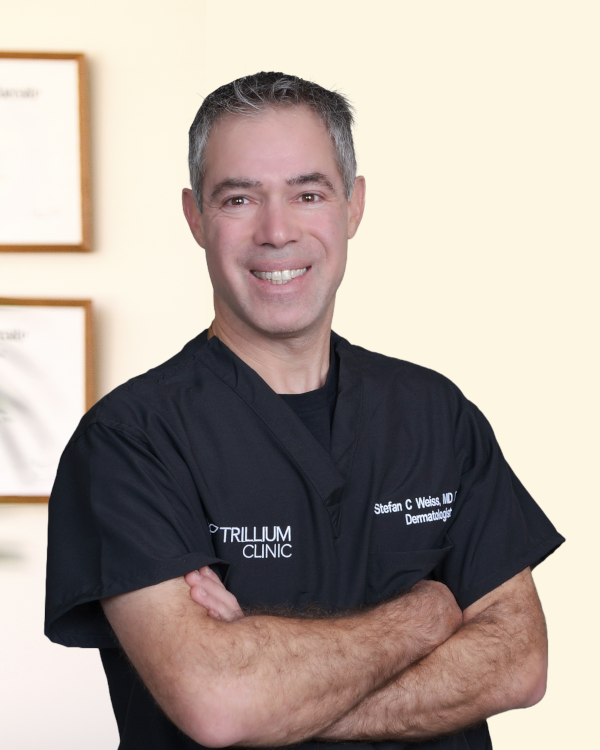
Stefan C. Weiss, MD, FAAD, is a board-certified dermatologist, the medical director of Trillium Clinic and an adjunct professor of dermatology at Brown University. He trained at Duke University School of Medicine and Stanford University Medical Center, has authored more than 100 peer-reviewed abstracts, posters and manuscripts, and has over two decades of experience in medical and cosmetic dermatology.
References
- American Med Spa Association. ASPS 2025 Statistics Report Highlights Continued Demand for Aesthetic Treatments, Volume Restoration and Healthy Aging. September 3, 2026.
- American Academy of Dermatology. Botulinum toxin: FAQs.
- American Academy of Dermatology. Fillers: FAQs.
- American Academy of Dermatology. Is it possible to tighten your skin without a facelift?
This article is for general education and isn’t a substitute for personal medical advice. A board-certified dermatologist can tell you which treatment is right for you.