Last updated: October 28, 2026
Exosomes and platelet-rich plasma (PRP) are both used as add-ons to microneedling. Both aim to support the skin’s natural repair process, and both are also used for thinning hair. But they come from different places, are regulated differently, and have different levels of research behind them.
This guide compares the two so you can have a better-informed conversation with your dermatologist.
What are exosomes?
Exosomes are tiny packages that cells release to communicate with each other. They carry proteins, fats and genetic messages from one cell to another. Researchers are studying their role in wound healing, pigmentation, scarring and skin rejuvenation.
The exosome products used in skin care are manufactured products, not something made from your own blood. Their source and contents vary from brand to brand, so results from one product don’t always apply to another.
What is PRP?
PRP is made from your own blood. A small amount is drawn from your arm and spun in a centrifuge to separate a layer rich in platelets, the blood cells that help with healing. That layer is then applied to or injected into the skin or scalp. Read more in our guide to microneedling with PRP.
How they’re used with microneedling
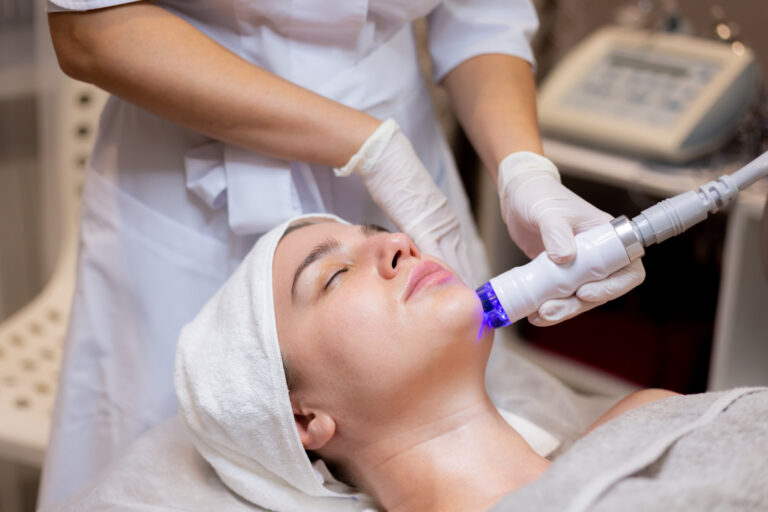
Microneedling makes tiny channels in the skin that prompt new collagen. Both exosomes and PRP can be applied to the skin during or right after microneedling, when those channels help them absorb.
At Trillium Medical Spa, exosomes are used as a topical treatment after microneedling, and microneedling can also be paired with PRP. See our microneedling page and our guide to microneedling with exosomes.
What the research shows
- PRP: For acne scars, a 2022 meta-analysis found that adding PRP to microneedling improved results compared with microneedling alone. A 2024 overview rated that evidence as low certainty, and the American Academy of Dermatology (AAD) says few studies have tested PRP for skin rejuvenation.
- Exosomes: Research is earlier. A scoping review in the Journal of Drugs in Dermatology notes that most exosome studies have been done in the lab or in animals, and results in people are still limited.
In short, both are promising add-ons, and PRP has more human research behind it so far. Neither is guaranteed to work for everyone.
How they’re regulated
- PRP: Because it’s made with needles and a centrifuge, the FDA classifies PRP as a medical device, according to the AAD.
- Exosomes: The FDA regulates exosome products and says that, in general, exosome products meant to treat diseases or conditions need FDA approval. There are currently no FDA-approved exosome products.
This is why it matters to have either treatment in a physician-led practice that can tell you exactly what product is being used and how it’s applied.
Exosomes vs PRP at a glance
| Exosomes | PRP | |
|---|---|---|
| Where it comes from | A manufactured product; source varies by brand | Your own blood |
| Blood draw needed | No | Yes, about 2 to 4 tablespoons |
| How it’s used at Trillium | Topically after microneedling; also for hair restoration | With microneedling; also for hair |
| Research in people | Limited; most studies are lab or animal based | More studies, mainly for acne scars, though of low certainty |
| FDA status | No FDA-approved exosome products | Classified as a medical device |
| Who may not suit it | Ask your dermatologist about allergies and skin conditions | Not advised with hepatitis C, HIV, blood cancers, blood thinners for heart disease, or skin cancer in the area (AAD) |
Exosomes or PRP: which is better?
There’s no single answer. The right choice depends on your goals, your health and how you feel about each option:
- PRP may suit you if you’d prefer a treatment made from your own body and want the option with more published research.
- Exosomes may suit you if you’d rather avoid a blood draw. If you can’t have PRP for medical reasons, your dermatologist can talk you through the alternatives.
- Neither may be needed. Microneedling alone works well for many people, and other options like chemical peels may fit your goals better.
A dermatologist can look at your skin and health history and recommend the best approach.
For thinning hair
Both exosomes and PRP are also used for hair loss. Because thinning hair has many causes, the first step is finding out why it’s happening. Learn more about hair restoration with exosomes or read our guide to microneedling with exosomes for hair.
Not sure whether exosomes or PRP fit your goals? Book a consultation at Trillium Medical Spa in Chapel Hill. Call 919-710-8100 or schedule online.
Frequently asked questions
PRP is made from your own blood and contains a concentrate of platelets. Exosomes are tiny messenger packages released by cells, used in skin care as a manufactured product. Both can be applied after microneedling.
Neither is best for everyone. PRP has more human research so far, mainly for acne scars, though that evidence is of low certainty. Exosome research in people is still limited. A dermatologist can help you choose based on your goals and health.
No. The FDA says there are currently no FDA-approved exosome products, and that exosome products meant to treat diseases or conditions generally need approval. PRP is classified by the FDA as a medical device.
No. Exosome products don't come from your own blood. PRP does need a small blood draw, about 2 to 4 tablespoons.
Yes. Both are commonly applied during or right after microneedling, when the tiny channels in the skin help them absorb. At Trillium Medical Spa, both can be added to microneedling.
Both are used for thinning hair. Since hair loss has many causes, a dermatologist should first find out why it's happening before recommending a treatment.
About Dr. Weiss
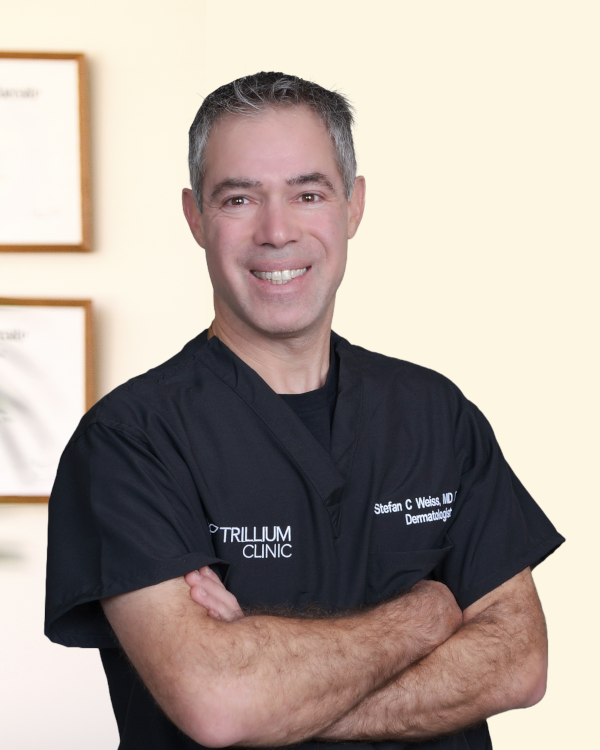
Stefan C. Weiss, MD, FAAD, is a board-certified dermatologist, the medical director of Trillium Clinic and an adjunct professor of dermatology at Brown University. He trained at Duke University School of Medicine and Stanford University Medical Center, has authored more than 100 peer-reviewed abstracts, posters and manuscripts, and has over two decades of experience in medical and cosmetic dermatology.
References
- U.S. Food and Drug Administration. Consumer alert on regenerative medicine products including stem cells and exosomes.
- Journal of Drugs in Dermatology. Exosome-based therapies in dermatology: a scoping review.
- Exosomes: the emerging mechanisms and potential clinical applications in dermatology.
- American Academy of Dermatology. Is platelet-rich plasma the secret to younger-looking skin?
- Kang and Lu. Combined effect of microneedling and platelet-rich plasma for the treatment of acne scars: a meta-analysis. Frontiers in Medicine, 2022.
- Platelet rich plasma use for treatment of acne scars: an overview of systematic reviews. 2024.
This article is for general education and isn’t a substitute for personal medical advice. A board-certified dermatologist can tell you which treatment is right for you.