Last updated: October 28, 2026
Microneedling with platelet-rich plasma (PRP) pairs two treatments: microneedling, which prompts your skin to make new collagen, and PRP, a concentrate made from a small amount of your own blood. You may also have heard it called a “vampire facial.”
This guide explains how PRP microneedling works, what it may help, what the research shows, and what to expect at your appointment. For general microneedling questions, see our microneedling treatment guide.
What is PRP?
Platelets are cells in your blood that help with healing. To make PRP, a small amount of your blood is drawn and spun in a machine called a centrifuge, which separates out a layer with a high concentration of platelets. That layer is what’s applied to your skin.
Because PRP is made from your own blood with a centrifuge and needles, the FDA classifies it as a medical device rather than a drug, according to the American Academy of Dermatology (AAD). PRP is also used to help with healing and is being studied for hair loss.
How PRP and microneedling work together
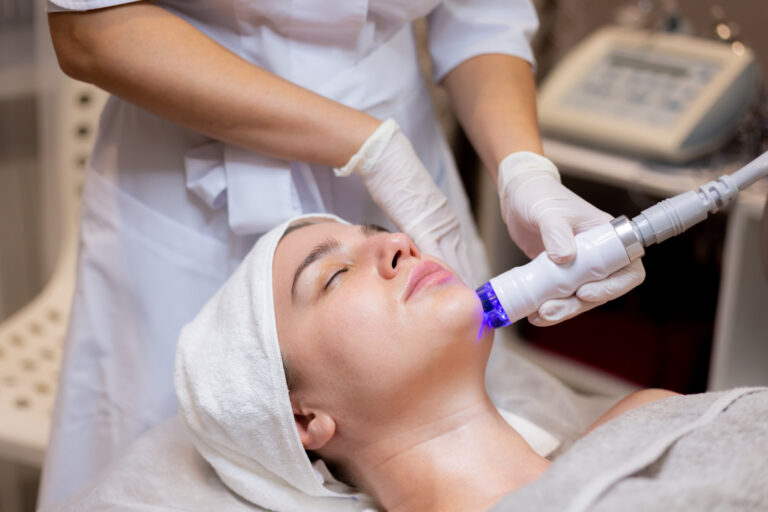
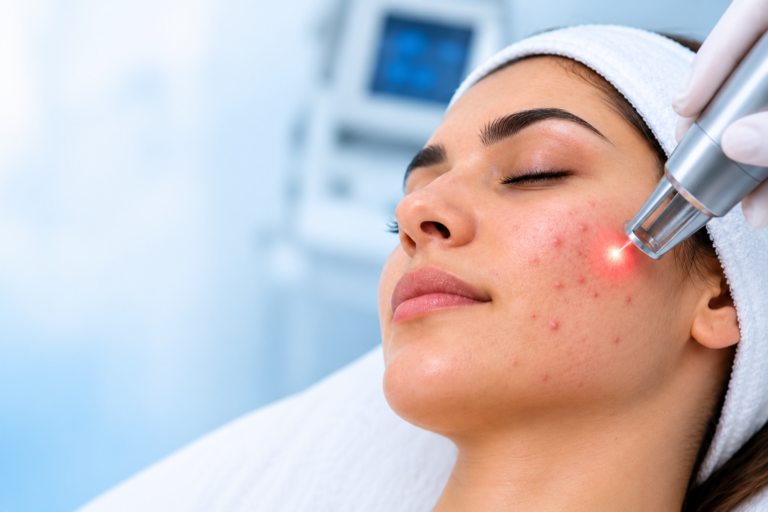
Microneedling uses a pen-like device with very fine needles to make tiny, controlled channels in the skin. Your skin responds by producing new collagen and elastin.
When PRP is applied during or right after microneedling, those channels let it reach deeper into the skin. The idea is that the platelets support the skin’s repair process and boost the collagen response.
What PRP microneedling may help
According to the AAD, some patients find PRP can:
- Soften acne scars
- Reduce wrinkles and fine lines
- Improve overall skin tone and texture
Results vary, and PRP won’t make skin look the way it did years ago. If acne scars are your main concern, our guide to microneedling for acne scars explains which scars respond best.
What does the research show?
Most of the research is on acne scars, and it’s encouraging but not conclusive:
- A 2022 meta-analysis of 14 studies with 472 patients found that adding PRP to microneedling raised the chance of at least 50% improvement in acne scars, and patients were more satisfied, compared with microneedling alone.
- A 2024 overview of 15 systematic reviews found the same pattern, along with shorter redness and crusting. But it rated the quality of the evidence as low to very low, because many studies were small or split-face designs.
- The AAD says few studies have tested PRP for skin rejuvenation, so there are still open questions about how many treatments work best and how far apart they should be.
In short: PRP may add to the results of microneedling, especially for acne scars, but it isn’t guaranteed. A dermatologist can help you decide whether it’s worth adding for your skin.
What to expect at your appointment
- Consultation. Your dermatologist reviews your skin, goals and health history, and checks that PRP is safe for you.
- Blood draw. A small amount of blood, about 2 to 4 tablespoons, is taken from your arm.
- Preparing the PRP. Your blood is spun in a centrifuge to separate the platelet-rich layer.
- Numbing and microneedling. A topical numbing cream is applied, then microneedling is performed.
- Applying PRP. The PRP is applied to the treated skin, where the microneedling channels help it absorb.
The AAD says a PRP procedure takes about 45 minutes to an hour from start to finish.
How many sessions will I need?
The AAD notes that most patients who see results have 3 or more PRP treatments. For microneedling, Dr. Weiss typically recommends 3 to 6 sessions spaced about 4 to 6 weeks apart. Your plan will depend on your skin and what you want to improve.
If you see results, the full effect builds over a few weeks to months as new collagen forms.
Side effects
The AAD says the procedure itself appears safe. You may have:
- Some pain, bruising or swelling, which usually goes away within a few days
- Pinkness for several hours and a tight feeling for a few days after microneedling
The biggest risk comes from how your blood is handled. It must be kept sterile to prevent infection, and the clinic must make sure only your own blood is returned to you. This is one reason to have PRP done in a medical setting.
Who shouldn’t have PRP
According to the AAD, PRP isn’t recommended if you have:
- Hepatitis C
- HIV or AIDS
- Any type of blood cancer
- Heart disease that requires a blood thinner
- Skin cancer in the area to be treated
These conditions affect your platelets. Also tell your dermatologist if you have active acne or a skin infection in the area, or tend to form raised scars.
Recovery and aftercare
Downtime is usually short. For the first 24 hours after microneedling:
- Don’t wear makeup, especially with a brush you’ve used before.
- Avoid swimming pools, saunas, hard workouts and heavy sweating.
- Keep the skin clean and follow the aftercare plan your dermatologist gives you.
Microneedling alone vs with PRP
| Microneedling alone | Microneedling with PRP | |
|---|---|---|
| How it works | Fine needles trigger new collagen | Same, plus your own platelets applied to the skin |
| Blood draw | No | Yes, about 2 to 4 tablespoons |
| Appointment length | About 20 to 30 minutes of treatment | About 45 minutes to an hour in total |
| Evidence for acne scars | Effective in a systematic review of 9 trials | Better results than microneedling alone in a 2022 meta-analysis, though evidence quality is low |
| Who it may not suit | Active acne, skin infection | Same, plus blood disorders, blood thinners and the conditions listed above |
Not sure which to choose? A dermatologist can recommend microneedling alone, with PRP, or with another treatment such as a chemical peel.
Microneedling with PRP at Trillium
Microneedling is offered at Trillium Medical Spa in Chapel Hill, and Dr. Weiss often combines it with PRP or chemical peels. Learn more on our microneedling page.
Curious whether PRP microneedling suits your skin? Book a consultation at Trillium Medical Spa in Chapel Hill. Call 919-710-8100 or schedule online.
Frequently asked questions
Microneedling combined with platelet-rich plasma, a concentrate made from a small amount of your own blood. The microneedling channels help the PRP reach deeper into the skin. It's sometimes called a vampire facial.
For acne scars, a 2022 meta-analysis found better results and higher patient satisfaction with PRP added. A 2024 overview rated that evidence low certainty, so PRP may help but isn't guaranteed.
Mostly mild: pain, bruising, swelling and pinkness that settle within a few days. The main risk is infection if blood isn't handled in a sterile way, so it should be done in a medical setting.
The AAD notes that most people who see results have 3 or more PRP treatments. Microneedling is usually done in a series of 3 to 6 sessions, about 4 to 6 weeks apart.
If you get results, they build over a few weeks to months. The AAD says results can last as long as 18 months.
People with hepatitis C, HIV, blood cancers, heart disease that needs a blood thinner, or skin cancer in the treatment area, according to the AAD.
About Dr. Weiss
Stefan C. Weiss, MD, FAAD, is a board-certified dermatologist, the medical director of Trillium Clinic and an adjunct professor of dermatology at Brown University. He trained at Duke University School of Medicine and Stanford University Medical Center, has authored more than 100 peer-reviewed abstracts, posters and manuscripts, and has over two decades of experience in medical and cosmetic dermatology.
References
- American Academy of Dermatology. Is platelet-rich plasma the secret to younger-looking skin?
- Kang and Lu. Combined effect of microneedling and platelet-rich plasma for the treatment of acne scars: a meta-analysis. Frontiers in Medicine, 2022.
- Platelet rich plasma use for treatment of acne scars: an overview of systematic reviews. 2024.
- American Academy of Dermatology. Acne scars: Diagnosis and treatment.
- Trillium Clinic. Microneedling.
This article is for general education and isn’t a substitute for personal medical advice. A board-certified dermatologist can tell you which treatment is right for you.