Last updated: October 25, 2026
Topical steroids are safe and effective for eczema, psoriasis and many other rashes when they’re used as directed. Most problems come from using a strong steroid for too long, on thin skin like the face or groin, or without a clear plan. Rarely, stopping long-term use of a moderate or strong steroid can trigger topical steroid withdrawal (TSW).
This guide covers the side effects to watch for, what TSW looks like and how it differs from a normal flare, and how to use steroid creams safely. If you’ve used a strong steroid cream daily for months, talk to a dermatologist before you stop.
What are topical steroids?
Topical steroids (topical corticosteroids) are creams, ointments and lotions that calm inflammation in the skin. The National Eczema Association explains that they’re grouped by strength, from Class 1 (super potent) to Class 7 (least potent).
| Strength | Examples | Typical use |
|---|---|---|
| Mild | Hydrocortisone 1% (over the counter) | Short courses on the face and in skin folds |
| Moderate | Triamcinolone acetonide | Body and limbs |
| Strong to very strong | Betamethasone dipropionate, clobetasol | Thick or stubborn patches, usually for short periods |
Some creams combine a steroid with another medicine. Clotrimazole and betamethasone dipropionate cream, for example, pairs an antifungal with a strong steroid, so the same side effects apply if it’s used for too long.
Common side effects of topical steroids
The National Eczema Association lists skin thinning, acne, skin discoloration and stretch marks as the most common side effects of overuse. The risk depends on the steroid’s strength, where it’s used and for how long.
| Side effect | What it looks like | Most likely when |
|---|---|---|
| Skin thinning (atrophy) | Thin, shiny, fragile skin that bruises or tears easily | Strong steroids used for a long time |
| Stretch marks (striae) | Lines in the armpits, groin or inner thighs | Long use in skin folds. These usually don’t fade. |
| Visible small blood vessels | Fine red lines | Long use on the face |
| Acne and perioral dermatitis | Red bumps around the mouth, nose or eyes | Steroids used on the face |
| Color changes | Lighter patches of skin | Long use, more visible on darker skin |
| Extra hair growth | Fine hair in the treated area | Long use in one spot |
Rarely, very strong steroids used over large areas for a long time can be absorbed into the body and affect its own hormone production, called adrenal suppression. Children are more vulnerable because their skin absorbs more.
What is topical steroid withdrawal (TSW)?
TSW, also called topical steroid addiction or red skin syndrome, is a reaction that can happen after stopping long-term topical steroid use. The UK’s medicines regulator, the MHRA, reviewed the evidence in 2021 and concluded it is real but rare. It found:
- It’s linked to prolonged, frequent or inappropriate use of moderate to high potency steroids.
- It has been reported after daily use for longer than a year, and in children after as little as 2 months of daily use.
- People with atopic dermatitis (eczema) appear most at risk.
- Symptoms start days to weeks after stopping.
A 2015 systematic review in the Journal of the American Academy of Dermatology found most reported cases involved the face or genital area, usually after long-term use of strong steroids. Burning or stinging was the most common symptom, and redness the most common sign. The authors noted the evidence was low quality, and much is still unknown, including how often TSW happens.
Symptoms of topical steroid withdrawal
The National Eczema Association lists these symptoms:
- burning or stinging skin
- redness
- flaking, shedding or peeling skin that spreads
- swelling
- oozing bumps
- pain
- trouble sleeping, tiredness and low mood if symptoms last
TSW or an eczema flare? How to tell the difference
The most common thing that happens after stopping a steroid is simply a flare of the original condition, which usually responds to treatment. The MHRA says TSW should be considered when:
| Sign | Points toward TSW | Points toward a normal flare |
|---|---|---|
| Main symptom | Burning | Itch |
| Redness | Spread evenly over a large area | Patchy |
| Location | Unusual places, beyond where you applied the steroid | Your usual eczema spots |
| How it feels | Different from your usual rash | Familiar |
| History | Long, continuous use of a moderate or strong steroid | Short or occasional use |
On darker skin, redness can look pink, purple or simply darker than your usual skin tone. A skin biopsy usually can’t tell the two apart, so a careful history and exam matter most.
How topical steroid withdrawal is managed
The National Eczema Association describes a combined approach:
- Stopping under supervision. A gradual taper guided by a clinician is often recommended to reduce symptoms.
- Supportive care. Moisturizing, managing pain and itch, and treating any skin infection.
- Non-steroid treatments. To keep the underlying eczema under control.
- Regular follow-up. To track progress and adjust the plan.
How to use topical steroids safely
The MHRA advises using the lowest strength that works and knowing exactly how to use it. In practice:
- Use the right strength for the area. Avoid strong steroids on the face, groin and armpits unless a doctor has told you to.
- Use enough, for the right length of time. Using too little can drag treatment out longer.
- Know when to stop or step down. Ask how long to use it, and how to cut back once the rash improves.
- Don’t use someone else’s cream, and don’t cover treated skin unless you’ve been told to.
- Check combination creams. Some antifungal or anti-itch creams contain a strong steroid.
- Come back if your skin gets worse, or if you’ve needed a steroid daily for many months.
Non-steroid treatments for eczema
You have more options than ever. The American Academy of Dermatology’s 2023 guidelines for eczema strongly recommend moisturizers and several non-steroid creams alongside topical steroids:
- Calcineurin inhibitors, such as tacrolimus and pimecrolimus, often used on the face and eyelids
- PDE4 inhibitors, such as crisaborole and roflumilast
- JAK inhibitor cream, such as ruxolitinib
Tapinarof cream was also approved for eczema in December 2024. For moderate to severe eczema, injections and pills are available too. Read more in our guides to eczema treatments and JAK inhibitors for atopic dermatitis.
When to see a dermatologist
See a dermatologist if:
- you’ve used a moderate or strong steroid cream daily for months
- your skin burns or turns red after you stop a steroid
- your rash is spreading to new areas
- you notice thinning skin, stretch marks or bumps around your mouth
- over-the-counter hydrocortisone isn’t working
Eczema and steroid side effects care in Chapel Hill, Smithfield and Burlington
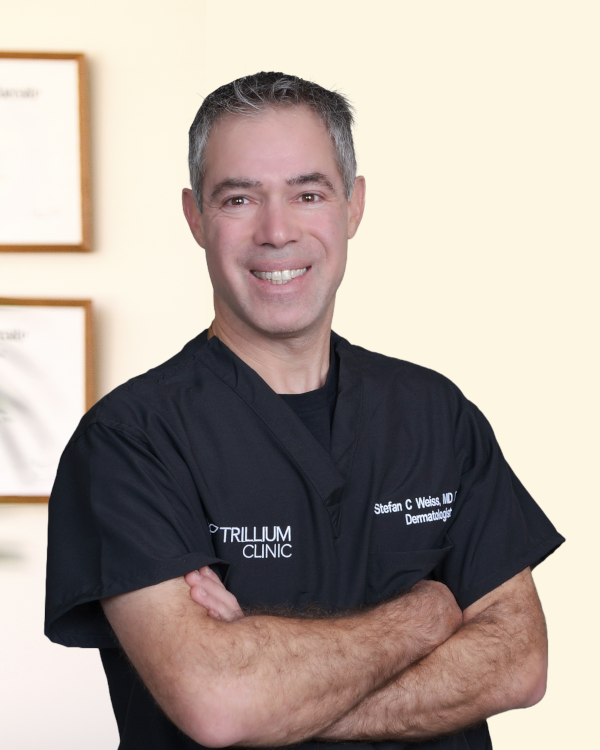
Board-certified dermatologist Dr. Stefan Weiss can review your steroid use, tell you whether your symptoms look like TSW or a flare, and build a safer long-term plan for your atopic dermatitis or psoriasis. Book a consultation to get started.
Frequently asked questions
It's a rare reaction that can happen after stopping long-term use of a moderate or strong topical steroid. Burning, spreading redness and peeling are the main signs. It's also called red skin syndrome or topical steroid addiction.
Yes. The UK medicines regulator reviewed the evidence in 2021 and concluded it's a real but rare side effect. Research is still limited, and it's often hard to tell apart from an eczema flare.
TSW is more likely if burning is worse than itch, redness spreads evenly beyond where you applied the steroid, the rash feels different from usual, and you've used a moderate or strong steroid daily for a long time.
Early thinning often improves after the steroid is stopped, but stretch marks usually don't fade. Using the right strength for the right length of time lowers the risk.
Hydrocortisone 1% is the mildest steroid and is fine for short courses. If you need it on your face for more than a week or it isn't helping, see a dermatologist.
Don't stop on your own if you've used it daily for a long time. A dermatologist can help you step down gradually and switch to non-steroid treatments if needed.
About Dr. Weiss
Stefan C. Weiss, MD, FAAD, is a board-certified dermatologist, the medical director of Trillium Clinic and an adjunct professor of dermatology at Brown University. He trained at Duke University School of Medicine and Stanford University Medical Center, has authored more than 100 peer-reviewed abstracts, posters and manuscripts, and has over two decades of experience in medical and cosmetic dermatology.
References
- National Eczema Association. Topical steroid withdrawal (TSW).
- National Eczema Association. Topical steroids and prescription eczema creams.
- Medicines and Healthcare products Regulatory Agency. Topical corticosteroids: information on the risk of topical steroid withdrawal reactions. September 2021.
- Hajar T, Leshem YA, Hanifin JM, et al. A systematic review of topical corticosteroid withdrawal (“steroid addiction”) in patients with atopic dermatitis and other dermatoses. J Am Acad Dermatol. 2015;72(3):541-549.
- Sidbury R, Alikhan A, Bercovitch L, et al. Guidelines of care for the management of atopic dermatitis in adults with topical therapies. J Am Acad Dermatol. 2023;89(1):e1-e20.
- StatPearls. Topical steroid withdrawal (red skin syndrome). Updated May 2024.
This article is for general education and isn’t a substitute for personal medical advice. A board-certified dermatologist can tell you which treatment is right for you.