Eczema Treatments: From Moisturizers to Biologics - What Actually Works
Eczema treatments have advanced significantly in recent years, giving patients more options than ever before to control symptoms and improve quality of life. Eczema, or atopic dermatitis, affects more than 31 million Americans. It is one of the most common chronic skin conditions seen in dermatology practices, and it is also one of the most undertreated; largely because many patients and providers do not realize how many effective options now exist.
This guide walks through the full landscape of eczema treatment options, from the foundational skincare practices that every patient needs to the advanced biologics that have transformed outcomes for moderate-to-severe disease.
Understanding Eczema Before You Treat It
Atopic dermatitis is an inflammatory skin condition driven by a dysfunctional skin barrier and immune system dysregulation, specifically an overactivation of the Th2 immune pathway. This is why eczema is so closely associated with other “atopic” conditions like asthma, allergic rhinitis, and food allergies.
The skin in eczema patients loses moisture rapidly, becomes more vulnerable to environmental triggers, and mounts an exaggerated inflammatory response to those triggers. Effective atopic dermatitis treatment addresses both the barrier dysfunction and the immune dysregulation.
Step 1: The Non-Negotiable Foundation - Moisturization
No eczema treatment plan works without aggressive, consistent moisturization. Emollients restore and protect the skin barrier, reducing the frequency and severity of flares and serving as the foundation of all treatments for eczema.
What to use:
- Ceramide-containing creams and lotions (e.g., CeraVe, Eucerin, Vanicream): Ceramides are lipids that are naturally depleted in eczema skin
- Ointments (e.g., petroleum jelly, Aquaphor): More occlusive and effective for severely dry or cracked skin, though less cosmetically elegant
- Thick creams over thin lotions: Lotions evaporate quickly and may actually worsen dryness in some patients
For many patients, finding the best moisturizer for eczema is one of the most important steps in achieving long-term symptom control.
When and how: Apply moisturizer within three minutes of bathing while the skin is still slightly damp (“soak and smear” technique). Apply at least once more throughout the day. Use fragrance-free products exclusively; fragrance is one of the most common eczema irritants.
Step 2: Topical Corticosteroids - The Workhorse of Eczema Treatment
Topical steroids eczema management has relied on for decades, remain highly effective when used correctly and continue to be among the most commonly prescribed topical treatments for eczema.
Steroids are classified by potency into seven classes, from super-potent (Class 1) to low-potency (Class 7). Matching the steroid strength to the body area and severity of disease is critical:
- Low-potency (hydrocortisone 1%): Appropriate for the face, eyelids, and skin folds
- Mid-potency (triamcinolone 0.1%): Appropriate for the body and extremities in adults
- High-potency (clobetasol 0.05%): Reserved for thick, lichenified plaques; not for the face or folds
Common concerns: Patients and parents often worry about steroid side effects, particularly skin thinning (atrophy). These risks are real but typically occur with prolonged, high-potency steroid use on delicate skin. Used appropriately, topical steroids are safe and dramatically effective. “Steroid phobia” is a documented barrier to effective eczema management and often results in undertreated, suffering patients.
When prescribed appropriately by a dermatologist for eczema treatment, topical corticosteroids remain one of the most effective options for controlling inflammation and providing rapid eczema flare treatment in both children and eczema in adults.
Step 3: Topical Calcineurin Inhibitors (TCIs)
For areas where steroids carry more risk: the face, eyelids, and skin folds, or for patients who need longer-term anti-inflammatory maintenance therapy, topical calcineurin inhibitors (TCIs) are an excellent option. These topical treatments for eczema provide effective inflammation control without the risk of skin thinning associated with long-term steroid use.
- Tacrolimus ointment (Protopic): Available in 0.03% (children) and 0.1% (adults) formulations
- Pimecrolimus cream (Elidel): Slightly milder, often used for mild-to-moderate eczema
TCIs do not cause skin atrophy, making them suitable for prolonged use. They do carry an FDA black box warning about a theoretical lymphoma risk, but this warning is considered controversial; large population studies have not confirmed a meaningful clinical risk.
A burning or stinging sensation with initial application is common and typically resolves within a week of regular use. For many patients with facial involvement or sensitive skin, TCIs remain an important component of comprehensive atopic dermatitis treatment.
Step 4: Topical PDE4 Inhibitors
A newer class of non-steroidal eczema treatments, PDE4 inhibitors, reduce inflammation through a different mechanism.
- Crisaborole (Eucrisa): Approved for mild-to-moderate eczema in patients aged 2 and older; well-tolerated but can cause application-site stinging
- Roflumilast cream (Zoryve): A newer, more potent PDE4 inhibitor approved for adolescents and adults
These medications are particularly useful for patients who need non-steroidal eczema treatment options but have not tolerated TCIs well. They expand the range of available treatments for eczema and provide additional flexibility for long-term disease management.
Step 5: Topical JAK Inhibitors
The newest class of topical agents for eczema, JAK (Janus kinase) inhibitors, target intracellular signaling pathways involved in itch and inflammation.
- Ruxolitinib cream (Opzelura): Approved for mild-to-moderate atopic dermatitis treatment in patients 12 and older; notably effective for itch relief, often within days
Among newer topical treatments for eczema, ruxolitinib has generated significant interest because of its rapid reduction in itch, one of the most disruptive symptoms experienced by patients with eczema in adults and adolescents.
These agents carry some systemic absorption considerations, so they are typically recommended for limited body surface area use.
Step 6: Phototherapy
For patients with moderate-to-severe eczema that is not controlled with topicals, narrowband UVB (NB-UVB) phototherapy is an effective and underutilized option. Treatment involves exposing the skin to specific UV wavelengths two to three times per week in a clinical setting.
Phototherapy is particularly valuable for patients who:
- cannot afford or access systemic biologics
- are pregnant or breastfeeding
- have widespread disease not amenable to topical-only management
Phototherapy can be an excellent option for patients seeking alternatives to biologics for eczema or those requiring additional support when conventional eczema treatments are not providing adequate control.
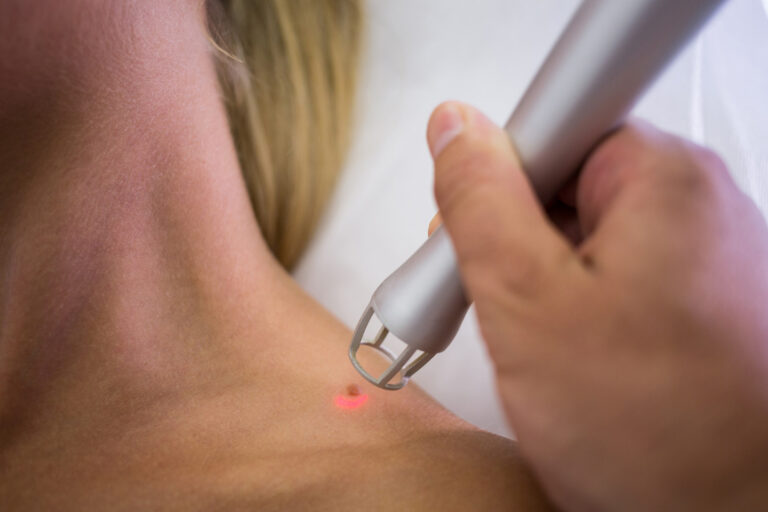
Excimer laser therapy targets localized patches and can be highly effective for focal eczema in resistant areas. For some patients, it can play a valuable role in an individualized eczema flare treatment strategy developed by a trusted dermatology clinic near Chapel Hill.
Step 7: Systemic Therapies - Biologics and JAK Inhibitors
This is where eczema treatment has been transformed in the past decade. For patients with moderate-to-severe disease, modern systemic therapies have dramatically expanded available eczema treatment options and improved long-term disease control.
Dupilumab (Dupixent)
Dupixent for eczema has become one of the most significant advances in modern dermatology. Dupilumab is a monoclonal antibody that blocks the IL-4 and IL-13 signaling pathways, two cytokines central to Th2-driven inflammation in eczema. It is the first biologic approved for atopic dermatitis treatment and remains the gold standard for moderate-to-severe disease.
Dupilumab is administered as a subcutaneous injection every two weeks (after a loading dose). In clinical trials, approximately 50–60% of patients achieved clear or almost clear skin. Conjunctivitis (eye inflammation) is the most notable side effect, affecting about 10% of patients.
Dupilumab is approved for patients as young as 6 months old.
Tralokinumab (Adbry)
Tralokinumab specifically targets IL-13 and is approved for moderate-to-severe eczema in adults. It has a similar efficacy profile to dupilumab with potentially lower rates of conjunctivitis. As one of the newer biologics for eczema, it offers another targeted option for patients requiring systemic therapy.
Lebrikizumab (Ebglyss)
Another IL-13 inhibitor, lebrikizumab, is dosed monthly after initial loading doses — a potential convenience advantage. It further expands the growing category of biologics for eczema available to patients with persistent disease.
Oral JAK Inhibitors
For patients who prefer oral therapy or who have not responded adequately to biologics:
- Upadacitinib (Rinvoq): A selective JAK1 inhibitor with robust efficacy data; some head-to-head studies suggest superior clearance rates compared to dupilumab
- Abrocitinib (Cibinqo): Another selective JAK1 inhibitor with strong itch control
- Baricitinib (Olumiant): A JAK1/2 inhibitor approved in the EU and for adult eczema in the U.S.
These agents represent important advances in atopic dermatitis treatment, particularly for patients seeking alternatives to injectable biologics.
JAK inhibitors carry class labeling warnings about serious infections, cardiovascular events, and malignancy, based largely on rheumatoid arthritis data. Patient selection and monitoring are important.
Addressing Triggers and Comorbidities
Effective eczema management goes beyond medications. Even the most advanced eczema treatments work best when underlying triggers and contributing factors are addressed.
- Identify and avoid personal triggers: Common ones include wool, synthetic fabrics, certain soaps, sweat, stress, and dry air
- Treat secondary infections: Eczema skin is vulnerable to Staphylococcus aureus colonization, which perpetuates inflammation; infected eczema may require topical or oral antibiotics
- Screen for allergies: Patch testing for contact allergens and allergy testing for environmental or food triggers can identify avoidable triggers
- Manage itch-scratch cycles: Antihistamines offer limited benefit for eczema itch (which is not histamine-mediated), but sleep aids and behavioral strategies can help break the nocturnal scratch cycle
An individualized eczema flare treatment plan often includes both trigger management and appropriate medical therapy.
A Word on Eczema in Children
Pediatric eczema requires special consideration. Low-potency topical steroids eczema treatment, TCIs, and now Dupixent for eczema (approved down to 6 months) are all available options. The emphasis on trigger avoidance and emollient-first therapy is especially important in infants and toddlers.
Emerging evidence supports early emollient use in high-risk infants as a potential preventive strategy against developing atopic dermatitis, though this remains an active area of research.
While much attention is placed on childhood eczema, eczema in adults remains a significant and often underrecognized problem that may require more advanced therapies and long-term management strategies.
When to See a Dermatologist
If over-the-counter moisturizers and mild hydrocortisone are not controlling your eczema, it is time to see a board-certified dermatologist. The landscape of eczema treatment has changed dramatically, and no one should be managing moderate-to-severe eczema without access to the newer therapies that can dramatically improve quality of life.
Whether you are looking for an eczema specialist near Chapel Hill, their professional evaluation can help identify the most effective treatment strategy for your specific condition.
Schedule an appointment today to get the most efficient care.
FAQs
The most effective eczema treatments depend on the severity of the condition. Mild cases often respond well to moisturizers and topical treatments for eczema, while moderate-to-severe disease may require phototherapy, Dupixent for eczema, other biologics for eczema, or oral JAK inhibitors. A personalized treatment plan developed by a dermatologist typically provides the best results.
The best moisturizer for eczema is usually a fragrance-free, thick cream or ointment that helps restore the skin barrier. Products containing ceramides, such as CeraVe, Eucerin, and Vanicream, are commonly recommended. Ointments like petroleum jelly may be especially helpful for severely dry or cracked skin.
Yes. Topical steroids eczema treatments remain one of the most effective ways to reduce inflammation and control flares when used correctly. Side effects such as skin thinning are generally associated with prolonged use of high-potency steroids on delicate areas. Under a dermatologist's supervision, topical steroids are considered safe and highly effective.
Dupixent for eczema works by blocking IL-4 and IL-13, two key inflammatory pathways involved in atopic dermatitis. It is approved for patients as young as 6 months old and has become a leading atopic dermatitis treatment for moderate-to-severe disease. Many patients experience significant improvements in itch, inflammation, and overall skin clearance.
You should consult a dermatologist for eczema treatment if over-the-counter moisturizers, hydrocortisone, or other basic therapies are not adequately controlling your symptoms. Frequent flares, severe itching, sleep disruption, widespread rash, or recurrent infections are all signs that more advanced eczema treatment options may be needed. An eczema specialist near Chapel Hill can help identify triggers and recommend therapies tailored to your specific condition.
This post is for informational purposes only and does not constitute medical advice. Consult the board-certified dermatologists at Trillium Dermatology, a leading dermatologist near Chapel Hill, to determine the right treatment plan for your specific condition.