Laser Scar Treatment: Options, Timing, Results & Recovery
Laser scar revision can offer meaningful improvement for patients who have healed from surgery but remain unhappy with the appearance, texture, or discomfort of their scar. You made it through surgery. Whether it was a C-section, a tumor removal, a joint replacement, or a cardiac procedure, you faced something difficult and came out the other side. But for many patients, recovery doesn’t feel complete, because every time they look in the mirror, or reach for a shirt, or change at the gym, the scar is there. A permanent reminder, raised or discolored or tethered to the skin, of something they would rather put behind them.
At Trillium Dermatology, Dr. Stefan Weiss works with patients every week who carry that exact experience. They’ve healed medically. But they haven’t healed entirely. Laser scar revision can help improve the appearance, texture, color, and pliability of many surgical scars, and what I’ve seen it do for patients, both functionally and emotionally, continues to motivate the work I do.
For patients considering laser scar revision after surgery, understanding the type of scar, the available treatment options, and the right time to begin treatment is essential to achieving realistic, meaningful improvement.
Why Surgical Scars Are Different
Not all scars are created equal. A minor cut, handled cleanly, often heals with minimal trace. Surgical scars can require more specialized scar treatment because they result from deliberate, controlled incisions, but the healing process that follows is anything but simple.
When a surgeon closes a wound, the body launches a complex cascade of repair. Collagen floods the area, knitting tissue back together rapidly. This is survival biology: the body’s priority is closure, not cosmesis. The result is scar tissue: denser, less organized, and structurally different from the surrounding skin. It lacks hair follicles, sweat glands, and the fine collagen weave that gives healthy skin its texture and flexibility.
What emerges can take many forms. Some surgical scars remain flat and fade gracefully over time. Others become hypertrophic: raised and red, sometimes itchy or tender, staying within the wound’s borders. A smaller subset develops into keloids, which grow beyond the original incision and can be significantly disfiguring. These different scar types may require different approaches, from laser scar treatment to targeted keloid scar treatment. Many scars simply hyperpigment, darkening against the surrounding skin in ways that are especially pronounced in patients with medium to deep skin tones. And some scars adhere to the underlying tissue, creating a tethered or depressed appearance that can restrict movement and cause physical discomfort.
The location matters too. Scars over the chest, shoulders, and upper back are particularly prone to hypertrophy because of the constant tension from movement. Abdominal scars: C-sections, laparotomies, appendectomies, are common concerns in my practice, often because patients feel they affect how they look in swimwear or intimate settings. Facial scars, even small ones, carry significant psychological weight.
None of this is the fault of the surgeon. It’s the biology of wound healing, and it varies enormously from person to person based on genetics, skin type, age, and how the wound was managed in the weeks after surgery.
What Laser Scar Revision Actually Does
The term “laser scar revision” covers a range of approaches, and matching the right technology to the right scar is the most important decision in treatment. The best laser treatment for surgical scars depends on the scar’s type, age, color, texture, and location rather than on one universally superior laser. This is not a one-size-fits-all procedure.
The workhorse of modern scar treatment is fractional CO2 laser resurfacing. Fractional lasers work by delivering energy in thousands of microscopic columns across the skin, leaving the tissue between those columns intact. This “fractional” approach triggers robust collagen remodeling while preserving enough healthy skin to allow rapid healing. Over a series of treatments, the scar’s architecture changes: collagen fibers realign, surface texture smooths, and the distinction between scar and surrounding skin diminishes. For many patients, fractional CO2 resurfacing forms an important part of laser treatment for scars, particularly when texture and firmness are the primary concerns.
For red or pink scars, particularly fresh post-surgical scars that are still vascular, vascular lasers like the Excel V are highly effective. A vascular laser targets oxyhemoglobin in the blood vessels feeding the scar, reducing the redness and also dampening the inflammatory signals that drive abnormal collagen production. Starting vascular laser treatment early, once the wound has closed (typically six to eight weeks post-surgery), can meaningfully change the trajectory of a scar. This approach can be particularly valuable as laser treatment for surgical scars when persistent redness is a major concern.
Hypertrophic and keloidal scars benefit from a combination approach. Intralesional corticosteroid injections remain an important tool for reducing bulk and inflammation, and in conjunction with laser treatment can achieve results that neither modality accomplishes as well alone. Some protocols also incorporate 5-fluorouracil injections, which inhibit fibroblast proliferation and have shown strong evidence for reducing scar volume. For raised scars, this combination approach may form part of a personalized hypertrophic scar laser treatment or keloid scar treatment plan.
For tethered or depressed scars, subcision – a minor in-office procedure using a needle to release fibrous bands beneath the skin – can be combined with laser resurfacing to lift the scar toward the surface. Platelet-rich plasma (PRP) is another adjunct used selectively; when injected into treated scar tissue, it delivers growth factors that accelerate collagen remodeling and can enhance laser outcomes.
Pigmentation concerns, whether the scar is darker (hyperpigmented) or lighter (hypopigmented) than surrounding skin, require careful laser selection and settings. In these cases, the patient’s Fitzpatrick skin type must be considered carefully, since certain wavelengths and fluences carry a higher risk of post-inflammatory pigmentation changes in darker skin. This is an area where experience matters enormously: getting the parameters right protects the patient and produces better outcomes.
What to Expect from Treatment
A realistic conversation about expectations is something I insist on before any treatment begins. Laser scar revision can produce dramatic, life-changing improvements, but “revision” is the operative word. We are improving the scar, not erasing it. This is why scar revision treatment is individualized to the scar’s type, age, appearance, and the patient’s goals. Most patients require between two and five treatment sessions spaced four to eight weeks apart, and final results continue to develop for six to twelve months after the last session as collagen remodeling matures.
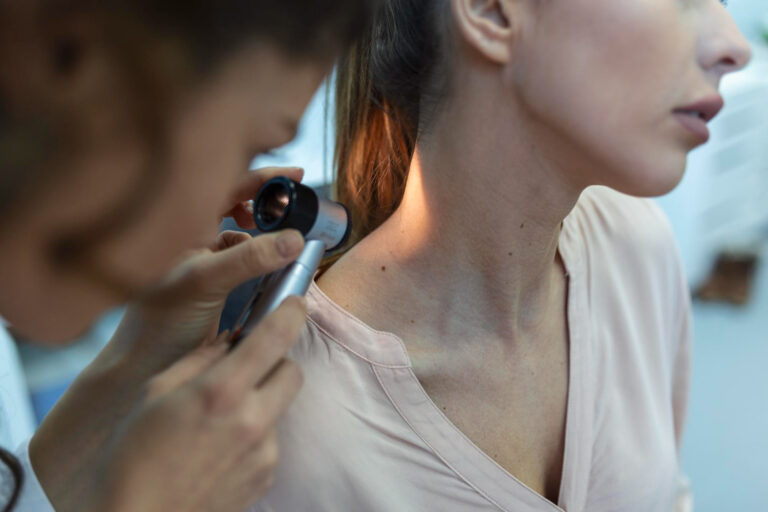
The first step is always a thorough consultation. I assess the scar’s age, type, depth, color, texture, and location. I ask about the patient’s skin type and history of abnormal scarring. We discuss their goals and what improvements are realistic. For most surgical scars, significant improvement is achievable: reduction in redness, flattening of raised areas, softening of texture, and improved blending with surrounding skin. Complete invisibility is rarely achievable, but most patients find that the improvements are profound enough to genuinely change how they feel about the scar.
Post-treatment care is straightforward but important. Depending on the laser used, there may be two to five days of redness, swelling, and a mild sunburn sensation. Sun protection is critical throughout and after the treatment course, since UV exposure during the remodeling phase can drive pigmentation changes. Patients should expect to be patient; the most visible improvements often come two to three months after a session, not immediately.
The Right Time to Start
One of the most common things I hear from patients is: “I wish I had come sooner.” There is a widespread misconception that you should wait years before seeking scar treatment; that the scar needs to “fully mature” before anything can be done. This is partially true for some interventions, but early treatment with vascular lasers often produces the best outcomes precisely because it intercepts the scar’s development before abnormal collagen becomes entrenched.
For most surgical scars, the window for initial evaluation is six to eight weeks post-surgery, once the wound is fully closed and any sutures or staples have been removed. At this point, a vascular laser treatment, gentle and with minimal downtime, can begin to steer the scar toward a better outcome. More aggressive resurfacing with fractional CO2 is generally deferred until the scar is three to six months old and no longer actively contracting. This staged approach is an important part of laser scar revision after surgery, allowing treatment to match the scar’s stage of healing.
If your scar is older, don’t be discouraged. Mature scars respond well to treatment, and I regularly work with scars that are years or even decades old. The biology is somewhat different; there is no active inflammatory phase to modulate, but fractional resurfacing and subcision remain effective tools for improving texture, color, and pliability in longstanding scars.
A Note on Why This Work Matters
Dermatology intersects medicine and quality of life in ways that aren’t always fully appreciated from the outside. A scar is not a life-threatening condition. But it can profoundly affect how a person moves through the world: what they wear, how comfortable they feel in their body, how often they think about a procedure they’d rather not relive.
Scar revision is a procedure that Trillium Dermatology, the cosmetic dermatologist Chapel Hill NC, approaches with that understanding. The technical side: choosing the right laser, the right protocol, the right combination of modalities, is something I’ve spent years developing expertise in. But the human side matters just as much. Patients come in carrying something beyond the scar itself, and helping them put it behind them, genuinely and lastingly, is what makes this one of the most rewarding aspects of my practice.
If you’re considering laser scar revision in Chapel Hill, NC, or looking for scar revision in Burlington, NC, a consultation can help determine which treatment approach is appropriate for your scar. Patients may benefit from laser skin treatment in Chapel Hill depending on the scar’s type, age, color, texture, and stage of healing.
If you’ve been living with a surgical scar that bothers you, whether it’s months or years old, I encourage you to come in for a consultation. There is almost always something meaningful we can do.
Dr. Stefan Weiss is a board-certified dermatologist and the founder of Trillium Dermatology. To book a laser scar revision consultation, contact our office directly or visit trilliumclinic.com.
Frequently Asked Questions About Laser Scar Revision
No. Laser scar removal is better understood as scar revision rather than complete removal. Laser treatments can reduce redness, improve texture, soften raised or tethered areas, and help a scar blend more closely with surrounding skin. Complete invisibility is rarely achievable, but meaningful improvement is often possible.
There is no single best laser treatment for surgical scars for every patient. Fractional CO2 laser resurfacing is commonly used to improve scar texture and stimulate collagen remodeling, while vascular lasers can be useful for red or pink scars. The appropriate approach depends on the scar's type, age, color, texture, location, and your skin type.
For many surgical scars, an initial evaluation can take place around six to eight weeks after surgery, once the wound has fully closed and sutures or staples have been removed. Vascular laser treatment may be appropriate at this stage, while more aggressive fractional CO2 resurfacing is generally delayed until the scar is three to six months old.
It can, but raised scars often require a combination approach. Hypertrophic scar laser treatment may be combined with intralesional corticosteroid or 5-fluorouracil injections. Keloid scar treatment also needs careful evaluation because keloids extend beyond the original wound and can behave differently from hypertrophic scars.
If you're looking for laser scar treatment in Chapel Hill, choose a board-certified dermatologist who can evaluate the scar before recommending a specific laser or combination treatment. It is important to evaluate the scar's type, age, depth, color, texture, location, and the patient's skin type before developing a treatment plan.