A Comprehensive Users Guide to Atypical Moles and Their Clinical Management
Dysplastic nevi, also known as atypical moles, are an important dermatological topic due to their unique characteristics and implications for skin cancer risk. While many individuals have moles (nevi), the presence of dysplastic nevi can raise concerns about melanoma, a potentially life-threatening form of skin cancer. This blog explores what dysplastic nevi are, how they differ from normal moles and melanoma, and what dysplastic nevi treatment approaches are recommended for mild, moderate, and severe cases.
What Are Dysplastic Nevi?
Dysplastic nevi are moles that have abnormal features when examined both clinically (by sight) and histologically (under a microscope). They were first described in the late 1970s and have since become a subject of extensive research, especially in relation to melanoma risk. Dysplastic nevi can appear anywhere on the body but are most commonly found on sun-exposed areas such as the back, chest, and limbs.
Clinical Features of Dysplastic Nevi:
- Size: Often larger than ordinary moles, typically greater than 5 mm in diameter.
- Color: May show a mix of colors, such as tan, brown, black, pink, or red.
- Borders: Irregular, indistinct, or notched edges rather than smooth and even.
- Symmetry: Frequently asymmetrical, with one half not matching the other.
- Surface: Sometimes slightly raised or flat, with a “fried-egg” appearance (a central raised portion with a flatter, pigmented rim).
Histological Features:
- Abnormal melanocyte (pigment cell) arrangement and architecture.
- Enlarged melanocyte nuclei and variable pigmentation.
- Features that do not meet criteria for melanoma but are atypical compared to normal nevi.
Dysplastic Nevus vs. Normal Mole vs. Melanoma: Key Differences
Confusion often arises when distinguishing between dysplastic nevi, normal moles, and melanoma. Here is how these entities differ:
Normal Mole (Common Acquired Nevus)
- Appearance: Small (usually less than 5 mm), round or oval, uniform color (tan, brown, or black), and smooth, well-defined borders.
- Stability: Remain stable over years, with little change in size, color, or shape during adulthood.
- Number: Most individuals have 10 to 40 moles.
- Risk: Rarely transforms into melanoma. The risk is extremely low.
Dysplastic Nevus
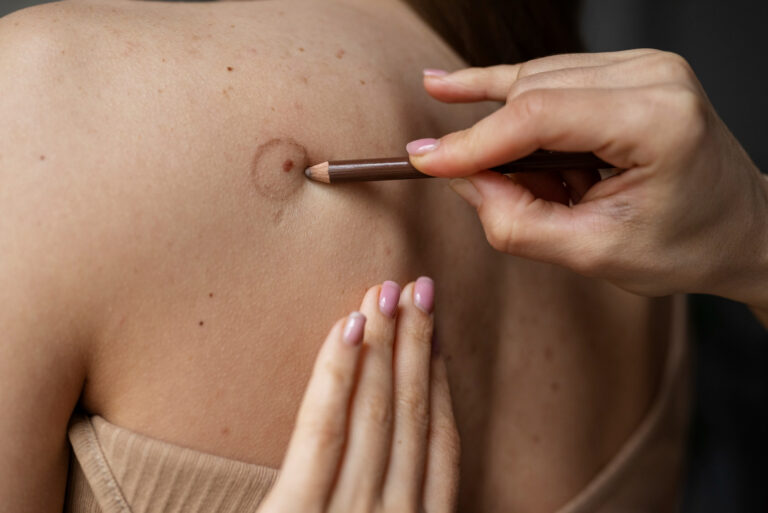
- Appearance: Larger than common moles (often >5 mm), with irregular shape, uneven color, and indistinct or notched borders.
- Location: More commonly found on sun-exposed skin, but can appear anywhere.
- Change: May change over time, particularly during adolescence or young adulthood.
- Risk: While most do not become melanoma, the presence of multiple dysplastic nevi increases melanoma risk, especially if there is a personal or family history of melanoma.Lorem ipsum dolor sit amet, consectetur adipiscing elit. Ut elit tellus, luctus nec ullamcorper mattis, pulvinar dapibus leo.
Melanoma
- Appearance: May arise as a new lesion or from a pre-existing mole. Typically asymmetrical, with irregular borders, multiple colors, and size often greater than 6 mm.
- Evolution: Changes rapidly in size, shape, or color, and may bleed, itch, or ulcerate.
- Risk: Melanoma is cancerous and can metastasize (spread) to other organs. Early detection is critical for survival.
- ABCDEs: Board-certified dermatologists use the “ABCDE” criteria to evaluate moles for melanoma:
– Asymmetry
– Border irregularity
– Color variation
– Diameter >6 mm
– Evolution (change in appearance)
Pathology and Grading of Dysplastic Nevi
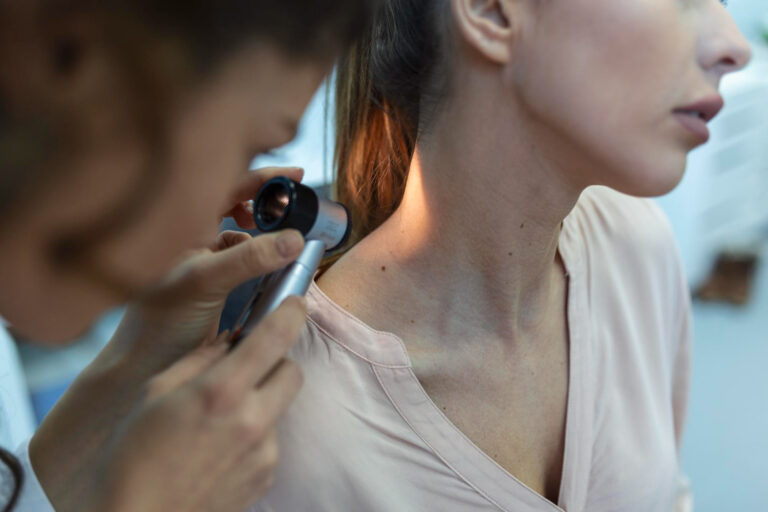
When a dermatologist suspects a mole is atypical, they may remove it (biopsy) for microscopic examination. Pathologists assess the degree of dysplasia – mild, moderate, or severe, based on cellular and architectural features.
Mild Dysplasia: Minimal architectural and cytological abnormalities, confined to the basal layer of the epidermis.
Moderate Dysplasia: More pronounced abnormalities, with atypical cells extending into the upper layers of the epidermis, but not fully throughout.
Severe Dysplasia: Marked cellular and structural irregularities, with atypical melanocytes extending near the surface of the epidermis, but without invasion into the dermis (which would indicate melanoma).
Treatment Approaches for Dysplastic Nevi
The treatment of dysplastic nevi treatment depends on the degree of atypia (dysplasia) identified on biopsy, as well as the patient’s clinical history and risk factors. Below is an in-depth review of management strategies for each grade.
Treatment of Mildly Dysplastic Nevi
- Observation Rather Than Excision: If a mildly dysplastic nevus is completely removed by biopsy (clear margins), no further treatment is necessary.
- Partial Removal: If the nevus is not completely excised, most guidelines suggest that observation is appropriate due to the extremely low risk of transformation to melanoma.
- Follow-Up: Routine skin self-exams and periodic dermatological check-ups are recommended. Sun protection and avoiding tanning beds are also advised.
Treatment of Moderately Dysplastic Nevi
- Complete Excision: If a nevus with moderate dysplasia has been fully excised, most experienced dermatologists recommend no further treatment. However, some may suggest removing residual nevus tissue if the margins are positive (not fully clear) because the risk of progression, though still low, is slightly higher than with mild dysplasia.
- Close Monitoring: For patients with multiple dysplastic nevi or a family history of melanoma, closer follow-up and skin surveillance may be warranted.
- Sun Protection: As with all patients, sun safety remains crucial.
Treatment of Severely Dysplastic Nevi
- Complete Surgical Excision: Strongly recommended. If the nevus with severe dysplasia has not been entirely removed, a wider excision with clear margins is necessary to ensure all atypical cells are eliminated because the risk of progression to melanoma is higher.
- No “Watch and Wait”: Observation alone is not appropriate for severely dysplastic nevi due to the significant risk of transformation.
- Long-Term Follow-Up: Patients should receive regular skin examinations by a dermatologist, in addition to practicing diligent skin self-exams at home.
The Role of Genetics and Risk Factors
Genetics play a substantial role in the development of dysplastic nevi and melanoma. Some families present with a condition called Familial Atypical Multiple Mole Melanoma (FAMMM) syndrome, characterized by numerous dysplastic nevi and a high risk of melanoma.
Other Risk Factors Include:
- Fair skin, light eyes, and hair
- History of sunburns or intense sun exposure
- Personal or family history of melanoma or dysplastic nevi
- Immunosuppression
Prevention and Skin Surveillance
Early detection of melanoma saves lives. Individuals with dysplastic nevi should adopt proactive measures to monitor their skin and minimize risk.
- Skin Self-Exams: Perform a head-to-toe skin exam monthly, using mirrors to check less visible areas.
- Professional Skin Checks: Consult a dermatologist annually, or more often if you have many dysplastic nevi or other risk factors.
- Sun Protection: Use broad-spectrum sunscreen (SPF 30+), wear protective clothing, hats, and sunglasses, and avoid peak sun hours.
- Avoid Tanning Beds: Tanning beds significantly increase melanoma risk.
Myths and Misconceptions
- All Large or Irregular Moles Are Dangerous: Not all atypical-looking moles are melanoma, but any new or changing mole should be evaluated by a healthcare professional.
- Removing Dysplastic Nevi Prevents Melanoma: Removing all dysplastic nevi does not guarantee melanoma prevention, as melanoma can develop de novo (from previously normal skin).
- It’s Safe to Ignore Mildly Dysplastic Nevi: While the risk is low, regular monitoring is still important.
When to Seek Medical Advice
Contact a healthcare provider if you notice:
- A mole that changes in size, shape, or color.
- Itching, bleeding, or ulceration of a mole.
- Appearance of a new, unusual mole after age 30.
- Multiple family members with melanoma or dysplastic nevi.
Conclusion
Dysplastic nevi are atypical moles that warrant attention due to their association with increased melanoma risk. Distinguishing between normal moles, dysplastic nevi, and melanoma is crucial for proper skin health management. Treatment decisions should be based on the degree of atypia and each patient’s risk profile, with the most aggressive management reserved for severely dysplastic nevi.
Ultimately, knowledge, vigilance, and consulting dermatology professionals are the best defenses against melanoma and other skin cancers. Regular skin checks, sun safe behaviors, and timely medical consultation for suspicious lesions can make all the difference in early detection and prevention.