Full Body Skin Exam: What to Expect and How to Prepare
A full body skin exam is a preventive dermatology visit in which a dermatologist checks your skin from head to toe for signs of skin cancer and other concerns. The examination itself is generally quick and painless, and can help identify spots that may need closer evaluation.
If you’ve never had one, it’s natural to wonder what’s involved. Here’s a step-by-step guide.
What Is a Full Body Skin Exam?
During the exam, your dermatologist looks at your skin, moles, spots, and growths across your whole body. That includes areas you can’t easily see yourself, such as your scalp, back, and the backs of your legs. The goal is to find skin cancers and precancers early and to create a baseline for tracking future changes.
Who Should Consider a Full Body Skin Exam?
- Anyone with a personal history of skin cancer
- People with a family history of melanoma
- Anyone with a changing, new, or unusual mole
- People with many moles or atypical moles
- Anyone with significant sun exposure, past blistering sunburns, or tanning bed use
- Adults who simply want peace of mind and a baseline check
How to Prepare for Your Appointment
- Remove nail polish from fingers and toes if you can. Skin cancer can occasionally appear under the nails.
- Skip heavy makeup so your dermatologist can see the skin on your face clearly.
- Wear your hair loose, without tight braids or clips, so your scalp can be checked.
- Make a list of spots that concern you. Photos of spots that have changed are helpful.
- Bring prior records, including any past biopsy or pathology reports.
What Happens During the Exam?
1. Medical history: Your dermatologist reviews your skin cancer history, family history, sun exposure, and any spots you’re concerned about.
2. Gown: You’ll change into a gown, and most patients keep their underwear on.
3. Head-to-toe check: Your dermatologist examines your scalp, face, ears, neck, chest, arms, hands, nails, back, legs, and feet.
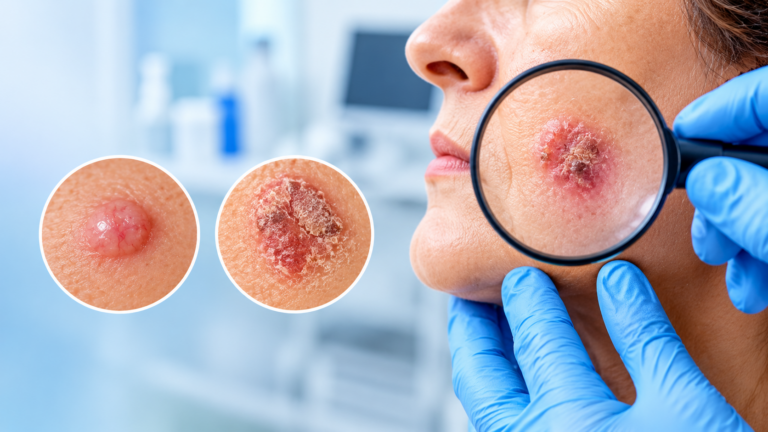
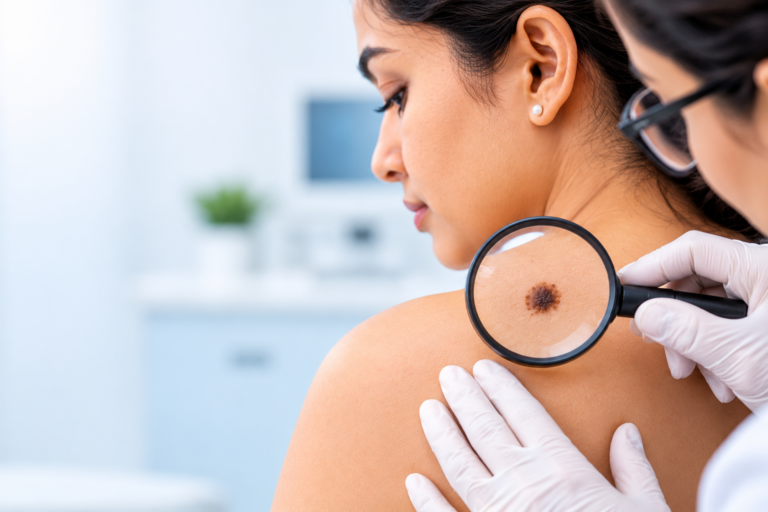
4. Dermoscopy: Spots that need a closer look are examined with a dermatoscope, a lighted magnifier.
5. Discussion: You’ll hear what was found and what, if anything, needs follow-up. The exam itself usually takes about 10 to 15 minutes.
For more information about what dermatologists look for during a skin cancer examination, see the American Academy of Dermatology’s guide to skin cancer exams.
What If Something Suspicious Is Found?
● Monitoring: A spot that looks mildly unusual may be photographed and rechecked at a later visit.
● Biopsy: If a spot needs testing, it can often be biopsied the same day after numbing. A lab examines the tissue.
● Follow-up plan: You’ll be contacted with results and next steps, which may include treatment or a shorter interval before your next exam. Most spots that get biopsied are benign. A biopsy is a way to get a definite answer.
How Often Should You Schedule a Skin Exam?
The frequency of a full body skin exam depends on your individual risk factors and medical history. Some adults may be advised to have annual exams, while people at higher risk, including those with a history of melanoma or many atypical moles, may need more frequent examinations, sometimes every 3 to 6 months. Your dermatologist can recommend an appropriate schedule.
Between visits, check your own skin monthly and contact your dermatologist if you notice changes. Not sure what counts as a change? See our guide to changing moles.
Full Body Skin Exams Near You
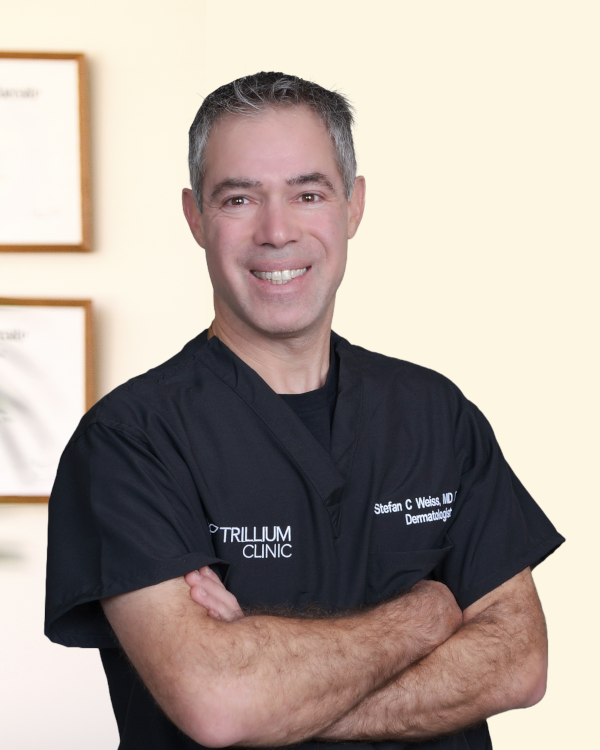
Full body skin exams are available at all three Trillium Clinic Dermatology offices. Learn more about Dr Stefan Weiss, the clinic’s founder, board-certified dermatologist, and Adjunct Professor of Dermatology at Brown University.
- Chapel Hill skin cancer screening, for Durham, Cary, Hillsborough, and Raleigh.
- Burlington skin cancer screening, for Mebane, Graham, and Alamance County.
- Smithfield skin cancer screening, for Clayton, Goldsboro, and Johnston County.
Add Your Heading Text Here
No. The exam is visual and uses a handheld magnifier. If a biopsy is needed, the area is numbed first, so most patients feel only a brief pinch.
The exam itself usually takes 10 to 15 minutes. Plan a little extra time for check-in, reviewing your history, and any biopsies.
You'll change into a gown, and most patients keep their underwear on. You can ask to skip any area you're not comfortable having examined, though skin cancer can occur anywhere, so a complete exam is most thorough.
Yes, and we encourage it. Bring a list or photos of any spots that are new, changing, or bothering you so we can check each one.