Vascular Laser Treatment for Acne: Benefits, What to Expect & Is It Right for You?
Vascular laser treatment for acne is becoming an increasingly important option for patients whose inflammatory acne and persistent redness do not fully respond to traditional medications. When most people think of lasers for acne, they think of resurfacing treatments for acne scars. But a different category of laser, vascular lasers, targets something else entirely: the blood vessel component of active acne lesions. For patients with inflammatory acne that has not responded fully to topical or oral therapies, vascular laser treatments can be a meaningful addition to their care plan.
Understanding Why Acne Is Vascular
Acne vulgaris is a multifactorial condition involving excess sebum production, follicular hyperkeratinization, Cutibacterium acnes (formerly Propionibacterium acnes) colonization, and inflammation. That inflammatory component is where vascular laser for acne treatments come in.
Active inflammatory acne lesions: papules, pustules, and nodules, are surrounded by dilated blood vessels. These vessels supply the inflammatory cells driving the acne lesion. They also contribute to the red or pink discoloration (post-inflammatory erythema, or PIE) that persists after an acne lesion resolves.
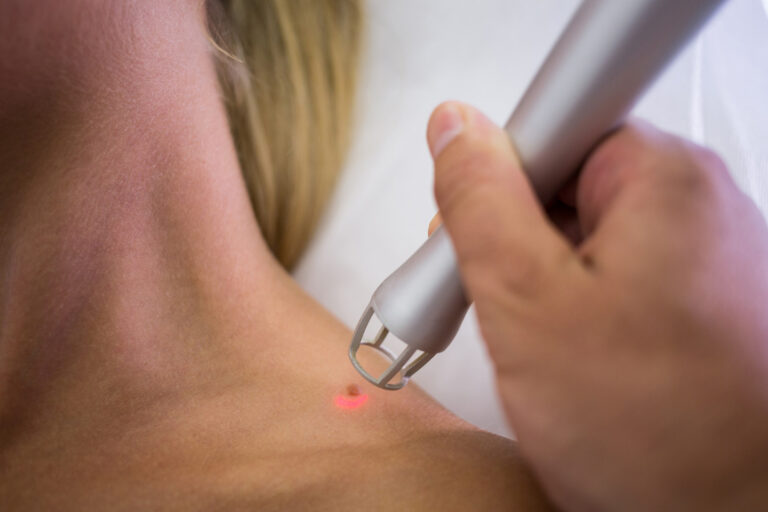
Vascular lasers treatment and intense pulsed light (IPL) devices target oxyhemoglobin in these blood vessels, selectively heating and damaging them through a process called selective photothermolysis. This reduces inflammation, kills C. acnes bacteria (which are sensitive to light-generated reactive oxygen species), and accelerates resolution of both active lesions and post-acne redness.
As a result, acne vulgaris laser therapy can address not only active inflammatory breakouts but also the lingering redness that often remains after blemishes heal.
Types of Vascular Lasers Used for Acne
Pulsed Dye Laser (PDL) - 585nm / 595nm
The pulsed dye laser acne treatment is the most well-studied vascular laser for acne. It emits light in the yellow spectrum that is preferentially absorbed by oxyhemoglobin, making it highly selective for blood vessels while sparing surrounding tissue.
PDL has been shown to:
- Reduce inflammatory lesion counts
- Decrease post-inflammatory erythema (redness after acne)
- Down-regulate sebaceous gland activity
- Reduce pore size over a series of treatments
PDL is particularly effective for patients with inflammatory papules and pustules, and for those troubled by the persistent redness that lingers after acne resolves. It is also one of the most effective options for patients seeking a laser for red acne scars or post-acne redness. Patients with fair to medium skin tones (Fitzpatrick types I–III) often respond especially well, as the 595nm wavelength carries some risk of post-inflammatory hyperpigmentation (PIH) in darker skin types.
What a PDL session feels like: Most patients describe pulsed dye laser acne treatment (PDL) as a rubber band snap with a brief flash of heat. Treatment sessions are typically 15–30 minutes. Bruising (purpura) was common with older PDL systems but is largely avoidable with modern settings using lower fluences and longer pulse durations. Some erythema and mild swelling for 24–48 hours post-treatment is expected.
For patients exploring laser treatments for acne or seeking acne laser dermatology solutions, PDL remains one of the most established and evidence-supported technologies available.
Nd:YAG Laser - 1064nm
The Nd:YAG laser at 1064nm penetrates more deeply into the dermis and is better absorbed by deeper blood vessels. Its key advantage over PDL is its safety across all skin types, including Fitzpatrick V and VI (darker skin tones), where PDL and IPL carry greater pigmentation risks.
Vascular laser treatment for acne using Nd technology targets the deeper vascular supply to sebaceous glands and inflammatory lesions. Long-pulsed Nd:YAG has also been used for laser hair removal in areas prone to folliculitis (a condition often confused with or coexisting with acne).
Some Nd:YAG or vascular laser acne treatment protocols specifically target sebaceous glands to reduce sebum production, an approach sometimes called “laser-assisted sebaceous gland ablation”, though this requires careful technique to avoid scarring.
What an Nd:YAG session feels like: Deeper penetration means more discomfort than PDL for some patients. A topical anesthetic is often applied before treatment. Post-procedure erythema is typically mild and resolves within hours.
KTP Laser - 532nm
The potassium titanyl phosphate (KTP) laser emits green light at 532nm, which is strongly absorbed by oxyhemoglobin. It is effective for superficial facial vessels and post-acne erythema but is generally limited to lighter skin types.
For patients primarily concerned with persistent redness after breakouts, KTP technology may be considered as part of a comprehensive laser treatment for acne plan.
Intense Pulsed Light (IPL)
While not technically a laser (it emits a broad spectrum of light rather than a single coherent wavelength), IPL devices with appropriate filters can target vascular components of acne. IPL is commonly used for post-inflammatory erythema and mild inflammatory acne, particularly in patients seeking combined treatment of acne and background redness or rosacea.
IPL is best suited for Fitzpatrick types I–III. In darker skin types, the risk of burns and pigmentation changes is significant without specialized equipment and technique.
Although not a true laser, IPL is often discussed alongside acne laser therapy because of its ability to reduce redness and improve overall skin tone.
What Vascular Lasers Do Not Do
It is important to set appropriate expectations:
- Vascular laser treatment for acne does not eliminate the root causes of acne (excess sebum, hormonal drivers, C. acnes). They are best used as an adjunct to medical therapy, not a replacement.
- They are not a first-line acne treatment. Standard topical and systemic therapies remain the foundation of acne management.
- They have a limited effect on comedonal acne (blackheads and whiteheads), which is not vascular in nature.
- They do not replace resurfacing treatments (fractional CO2, microneedling) for atrophic acne scars – a different problem requiring a different solution. Patients seeking laser treatment for acne scars near Chapel Hill may require separate scar-focused procedures.
Who Is a Good Candidate?
Vascular laser for acne treatments are most appropriate for patients who:
- Have inflammatory acne (papules, pustules, nodules) with a significant redness component
- Are troubled by post-inflammatory erythema (persistent redness after acne lesions heal)
- Have not achieved full clearance with topical or systemic therapies alone
- Want to reduce their antibiotic burden by supplementing with non-antibiotic therapies
- Are not currently on isotretinoin (laser treatments are contraindicated during active isotretinoin therapy and for 6–12 months afterward, depending on the laser type and provider preference)
Patients searching for acne laser treatment near me are often surprised to learn that the best candidates are not necessarily those with severe acne, but those whose breakouts are highly inflammatory and associated with persistent redness. In these cases, vascular laser treatment can be a valuable addition to a broader treatment plan developed by a dermatology clinic near Chapel Hill offering treatments with an experienced practice.
What to Expect: Treatment Protocol
Most patients undergoing vascular laser treatment for acne need a series of treatments, typically 3 to 6 sessions spaced 3 to 6 weeks apart, to see meaningful results. Maintenance sessions every few months can help sustain improvement.
Results are not instantaneous. Inflammation takes time to resolve, and the skin’s vascular remodeling continues for weeks after each session. Most patients begin to see noticeable improvement after their second or third treatment.
Before treatment:
- Avoid sun exposure and self-tanner for at least 4 weeks
- Discontinue any photosensitizing medications as directed by your provider
- Avoid retinoids for several days prior (provider-specific guidance)
After treatment:
- Apply sunscreen diligently – the treated skin is more sun-sensitive
- Avoid heat, vigorous exercise, and hot showers for 24–48 hours
- Expect mild redness and swelling; makeup can generally be applied the next day
Patients considering acne laser therapy should understand that consistency is important, as results build progressively over multiple sessions.
Combining Vascular Lasers With Other Acne Treatments
Vascular laser acne treatment works best as part of a comprehensive acne management strategy. Dermatologists often combine them with:
- Topical retinoids to address comedonal acne and prevent new lesion formation
- Blue light therapy (targeting C. acnes porphyrins) for additional antibacterial effects
- Chemical peels (salicylic acid, glycolic acid) for comedone extraction and surface renewal
- Hormonal therapies (oral contraceptives) for hormonally driven acne in women
By integrating vascular laser for acne with medical therapies, patients can often achieve better control of both active breakouts and persistent redness than with either approach alone.
Cost and Insurance Considerations
Laser treatments for acne are typically considered cosmetic procedures and are not covered by insurance. Per-session costs vary widely by geography and practice, ranging from approximately $200 to $600 per session. Multi-session packages are often available at reduced per-session pricing.
Given the need for multiple sessions, patients should budget accordingly and discuss realistic expectations with their provider before committing to a treatment series.
Finding the Right Provider
Vascular laser treatments for acne require significant expertise and properly calibrated equipment. Seek a board-certified dermatologist with documented experience in laser procedures and acne management. Ask to see before-and-after photos of patients with similar skin types and acne presentations. Be cautious of aesthetic spas offering laser acne treatments without physician oversight.
Whether you are searching for a vascular laser treatment clinic in Chapel Hill, a cosmetic dermatology clinic near Chapel Hill, or a dermatologist offering acne laser treatment, choosing an experienced provider is one of the most important factors influencing safety and results.
So, make sure you schedule an appointment with them to personalize the treatment to your skin type.
This article is intended for educational purposes and does not constitute medical advice. Consult the board-certified dermatologists at Trillium Dermatology to determine whether vascular laser treatments are appropriate for your acne.