Vascular Laser Treatment for Acne to Reduce Redness & Inflammation
Vascular laser treatment for acne focuses on reducing inflammation-driven redness that often makes breakouts appear more severe and long-lasting. Acne isn’t always just clogged pores; many breakouts are driven by inflammation, and that inflammation often shows up on the surface as persistent redness. If you’re dealing with angry red pimples, lingering red marks after acne clears, or sensitivity that makes topical products hard to tolerate, vascular laser treatment for acne may be a helpful option. Vascular lasers use specific wavelengths of light to target hemoglobin (the pigment in blood), helping reduce visible redness and calm inflammatory pathways that can keep acne looking “active” long after the blemish is gone. Vascular laser treatment for acne focuses on reducing inflammation-driven redness that often makes breakouts appear more severe and long-lasting.
What Is A Vascular Laser And Why Use It For Acne?
“Vascular” lasers are designed to treat blood vessels in the skin. In dermatology, that typically means reducing unwanted redness from conditions like rosacea, broken capillaries, and post-inflammatory redness. For acne, the goal is similar: when a pimple forms, the skin recruits blood flow and inflammatory chemicals to the area. That process can leave behind post-acne erythema – flat red or pink marks that linger for weeks or months, especially in fair to medium skin tones.
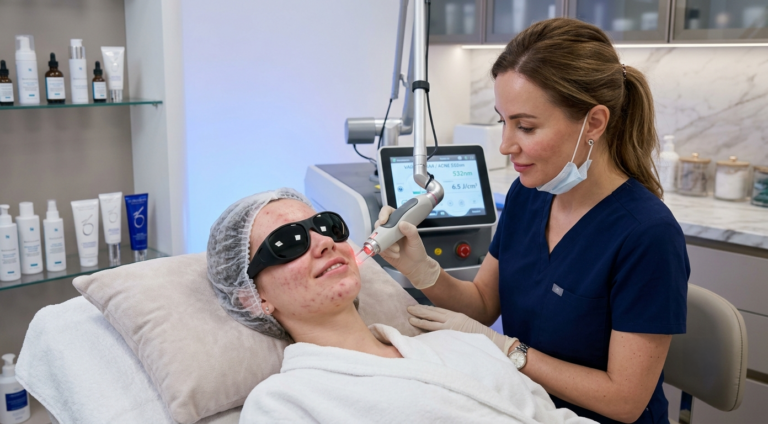
Vascular laser treatment works by delivering energy that is absorbed by hemoglobin, gently heating tiny superficial vessels. This can lessen visible redness and may also decrease the inflammatory “signal” around active lesions. Common options include pulsed dye lasers (PDL) (often used for surface redness) and certain Nd:YAG settings (which can reach deeper targets). Your dermatologist will choose the wavelength and settings based on the type of acne, the depth of redness, your skin tone, and your history of sensitivity or hyperpigmentation, ensuring the most appropriate laser treatment for acne.
Who’s A Good Candidate For Vascular Laser Treatment For Acne?
Vascular laser treatment for acne can be especially useful if you:
- Get inflamed, red breakouts (papules/pustules) that linger
- Have post-acne erythema (flat red marks) that won’t fade with time and sunscreen alone
- Can’t tolerate strong topicals due to irritation, dryness, or a compromised skin barrier
- Want to improve redness while also supporting a broader acne treatment plan (topicals, oral meds, or hormonal therapy when appropriate)
It’s also important to set expectations. Vascular laser treatments primarily target redness and inflammation. They won’t “melt” blackheads, replace comedone-focused treatments (like retinoids), or correct deeper scarring on their own. For pitted scars, resurfacing lasers, microneedling, or other scar-focused procedures may be better. A consult helps determine the right tool for the right problem and how vascular lasers fit into your overall treatment plan.
What To Expect At Your Appointment
Most visits start with a skin assessment and a discussion of your acne history, current products, and any medications. Photos may be taken to track progress. During treatment, patients typically feel a quick snap of heat; many vascular laser treatment devices also include cooling to improve comfort and protect the skin. Sessions are usually brief (often 10–30 minutes depending on the area treated), and you can generally return to normal activities the same day.
Aftercare is straightforward but important: keep skincare gentle for several days, avoid picking or exfoliating, and wear broad-spectrum sunscreen daily. Heat exposure (hot yoga, saunas) and aggressive activities may be paused temporarily depending on how your skin responds. Your dermatologist will give a personalized plan, especially if you’re combining laser treatment for acne with prescription acne treatment therapies.
How Many Treatments Do You Need and When Will You See Results?
With vascular laser treatment for acne, some people notice reduced redness within days, while others see a more gradual improvement as inflammation settles and superficial vessels remodel. A common plan is a series of 2–4 treatments spaced several weeks apart, though the exact number depends on how much redness you’re treating and whether you’re also working on active acne control. Think of vascular laser therapy as a “multiplier” for results: it can help your skin look calmer and more even while your underlying acne regimen prevents new lesions.
Side Effects, Downtime, And Safety Considerations
Typical side effects of vascular laser treatment for acne include temporary redness, mild swelling, and a sunburn-like warmth for 24–72 hours. Some treatments can cause brief purplish bruising (depending on settings and device), which may last several days. Less common risks include blistering, crusting, or pigment changes, especially if aftercare isn’t followed or if settings aren’t well matched to your skin tone. That’s why it’s important to work with board-certified dermatologists who routinely treat acne and skin of color and who can tailor the plan to your goals and risk factors.
Choosing The Right Laser (And The Right Dermatologist) Matters
When people search for “laser treatment for acne,” they often assume one device does everything. In reality, results come from matching the technology to the biology: active inflammatory acne, redness, and visible vessels, post-acne marks, pigment, and scarring can each require different tools. The best plans are customized and may combine vascular laser sessions with acne-safe skincare, prescription topicals, and (when appropriate) oral medications.
If you’re considering vascular laser therapy, a consultation with an experienced dermatologist can clarify whether your redness is post-acne erythema, rosacea overlap, irritation from products, or a mix of factors. The care team evaluates the full picture: your acne type, skin tone, lifestyle triggers, and prior treatments, so laser settings and supporting skincare are chosen for safety and predictable improvement.
Vascular Laser Treatment For Acne: Quick FAQs
Vascular laser treatment for acne can help both, but it’s best known for improving redness, including the red halo around active breakouts and the flat red marks left behind after pimples heal. Most patients do best when a laser is paired with a plan that prevents new acne lesions.
Most people describe quick, tolerable snaps of heat. Cooling methods and topical numbing (when needed) can make laser treatment for acne more comfortable.
Often yes, but device choice and settings matter to reduce the risk of post-inflammatory hyperpigmentation. This is one reason it’s worth seeing a dermatologist with experience customizing laser plans across skin tones.
Coverage varies and is often considered cosmetic when treating acne-related redness. Your clinic can review expected costs and the number of sessions recommended after your evaluation.
Conclusion
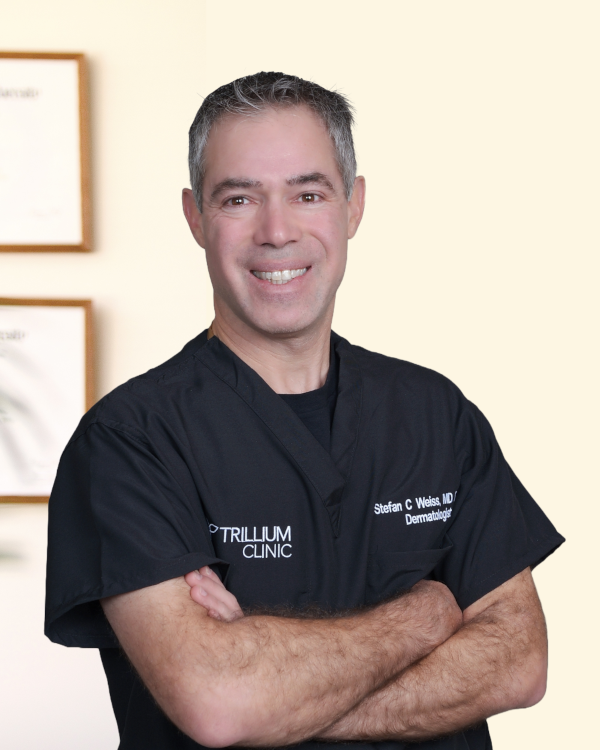
If acne redness is the part that won’t quit, either during breakouts or after they heal, vascular laser treatment for acne can be a smart, targeted way to calm skin and improve tone. To find out whether you’re a candidate and what type of laser is most appropriate, consider scheduling a consultation with Dr. Stefan Weiss at Trillium Dermatology for a personalized plan.